Fiberglass Reinforcement Capabilities in China
Use this fiberglass directory to compare Chinese producers of rovings, chopped strands, fabrics, basalt and quartz reinforcements. Review sizing compatibility, package format, mechanical properties, capacity and export credentials before placing orders.
Reinforcements, rovings, chopped strands and fabrics for composites
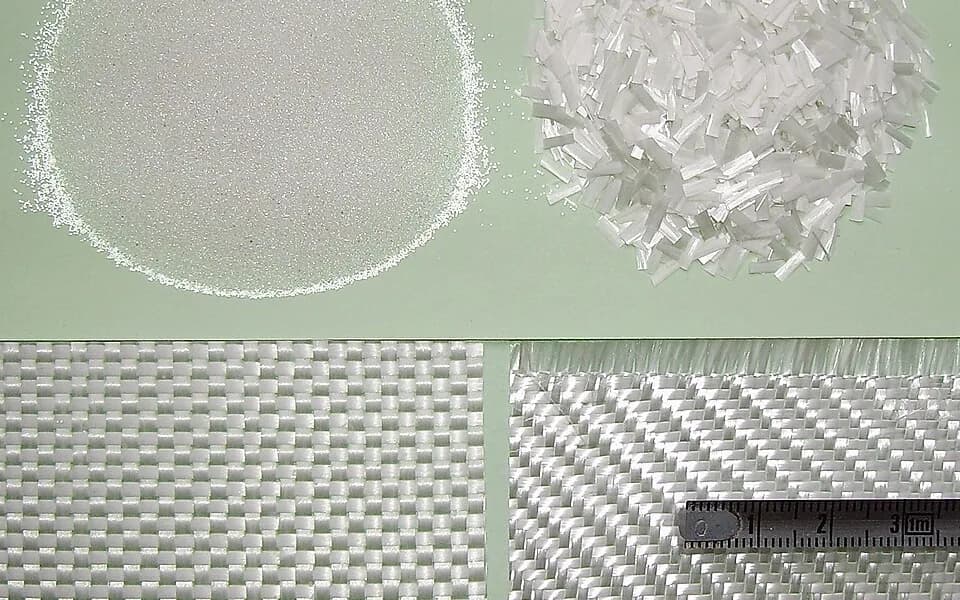
Compare Fiber & Glass sourcing evidence
Product-linked records and company-catalog candidates are labeled separately. Catalog matches are discovery leads, not confirmed offers. Check the linked profile for company roles, sources and review history. Sponsored records are identified below.
| Supplier / location | Recorded product scope | Evidence basis | Product MOQ / lead time | Source |
|---|---|---|---|---|
| Chongqing International Composite Materials Co., Ltd. Dadukou District, Chongqing, China | Fiber & Glass | Product-linked directory record Order-specific documents required. Profile reviewed: | MOQ: request quotation Lead time: request quotation | Company website |
| Jiangsu Tianlong Basalt Fiber Tech Co., Ltd. Yizheng, Yangzhou, Jiangsu, China | Fiber & Glass | Product-linked directory record Order-specific documents required. Profile reviewed: | MOQ: request quotation Lead time: request quotation | Company website |
| China Jushi Co., Ltd. Tongxiang, Zhejiang, China | Fiberglass yarn, roving, fabrics and mats | Product-linked directory record Order-specific documents required. Profile reviewed: | MOQ: request quotation Lead time: request quotation | Company website |
| Zhongfu Shenying Carbon Fiber Co., Ltd. Lianyungang, Jiangsu, China | Carbon fiber grades and reinforcements | Product-linked directory record Order-specific documents required. Profile reviewed: | MOQ: request quotation Lead time: request quotation | Company website |
| Taishan Fiberglass Co., Ltd. Tai'an, Shandong, China | Fiberglass roving, yarn, mats and fabrics | Product-linked directory record Order-specific documents required. Profile reviewed: | MOQ: request quotation Lead time: request quotation | Company website |
| Hubei Feilihua Quartz Glass Co., Ltd. Jingzhou, Hubei, China | Fiber & Glass | Product-linked directory record Order-specific documents required. Profile reviewed: | MOQ: request quotation Lead time: request quotation | Company website |
Product-family scope and evidence
GetFRP separates generally used engineering ranges from a supplier's commercial offer. Standards, properties and buying checks on this page define the questions for an RFQ; the linked company profiles identify the published source and the supplier- product relationship records the offer-specific evidence.
- Last editorial review
- 25 August 2026
- Supplier records linked
- 6
- Evidence status
- Rechecked per RFQ
Compare adjacent specifications before sending the RFQ
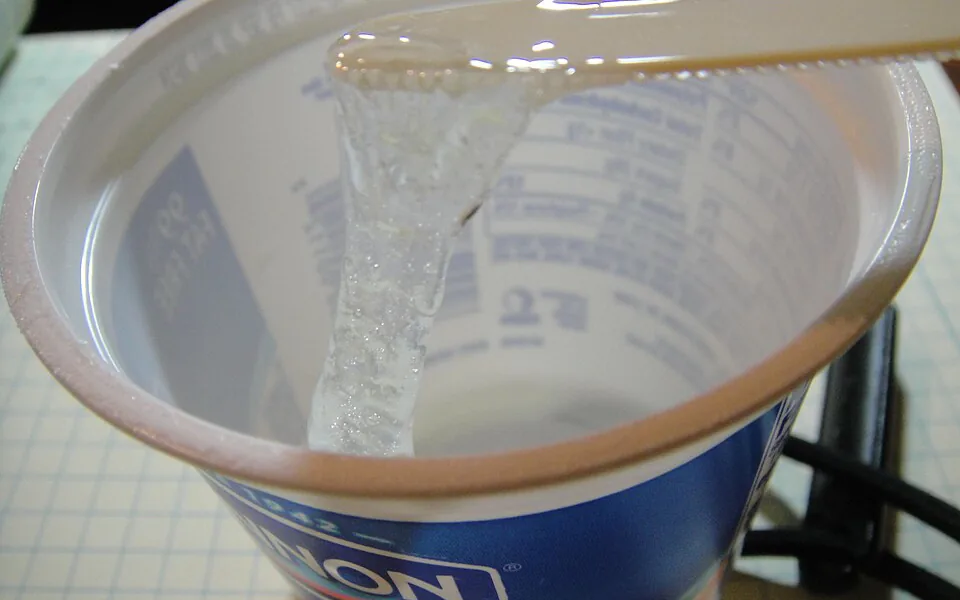
Specifications buyers and suppliers share
| Field | Typical range | Sourcing note |
|---|---|---|
| Fibre | E / ECR / S glass, carbon, basalt, aramid | State performance class and chemistry. |
| Form | Roving / chopped / mat / fabric / veil / prepreg | Match the downstream process. |
| Sizing | Process- and resin-compatible systems | Request compatibility and reference applications. |
| Key controls | Tex / tow / filament / areal weight / moisture | Define tolerance and sampling. |
| Packaging | Palletised bobbins, rolls or sealed bags | Control moisture, splice and handling damage. |
| Approval | CoA review + line trial + laminate test | Do not approve on datasheet alone. |
When shortlisting a fiberglass supplier, align the sizing with your exact resin chemistry and process route. Check package format, filament diameter, tex tolerance, roll width and batch consistency records before approving production shipments.
China is a major production base for glass-fibre rovings, chopped strand, mats and fabrics, as well as carbon, basalt and other high-performance reinforcements. A generic fibre designation is insufficient for composite processing. The sizing must be compatible with the resin and process, while tex, filament diameter, tow size, areal weight, weave, moisture and package format affect handling and laminate quality.
Pultrusion, winding, spray-up, SMC, thermoplastic compounding and infusion need different product forms and sizing behaviour. Buyers should provide the resin, process, line speed or flow need, target properties and existing reference grade. For carbon fibre, define tow size, strength and modulus class, surface treatment and test basis. For fabrics and mats, include areal-weight tolerance, width, roll length, splice policy and packaging.
getfrp screens verified producers and converters by fibre family, form, application, scale and export readiness. The matching process can include direct producers and specialised fabric or mat converters, but their roles are distinguished. Before approval, compare a current certificate of analysis and run process trials; a nominally equivalent roving can change wet-out, fuzz, breakage, resin demand and final performance when sizing or package construction differs.
Suppliers connected to Fiber & Glass
Review the evidence table above to distinguish product-linked records from company-catalog candidates. Company verification does not certify every offered specification. Request current product-level documents.

Chongqing Polycomp International Corporation (CPIC), established in 1991, is a Yuntianhua Group company focused on the R&D, production and sale of glass fiber and composite materials. CPIC's official website lists production bases in Chongqing, Zhuhai and Changzhou in China as well as overseas operations, supported by sales subsidiaries in North America, Europe and Hong Kong, China.

Jiangsu Tianlong Basalt Continuous Fiber Co., Ltd. was established in Yizheng, Jiangsu, in May 2007. Its official website describes an integrated operation covering R&D, production, sales, equipment manufacture, technical consulting and services for continuous basalt fiber and composite products. The current directory spans basalt yarns, chopped fiber, fabrics and geosynthetics; BFRP and GFRP rebar; anchor bolts; road anti-crack materials; and composite-fiber fire-protection systems. The company uses TLB as its brand abbreviation.

China Jushi Co., Ltd. is a core enterprise in China National Building Material's fiberglass business division, focused on fiberglass and finished fiberglass articles. Jushi's English website states that the company listed on the Shanghai Stock Exchange in 1999 under stock code 600176 and operates fiberglass production bases in China, Egypt and the United States.

Zhongfu Shenying Carbon Fiber Co., Ltd. was established in 2006 and is part of China National Building Material Group. The company develops, manufactures and sells carbon fiber and carbon-fiber composite materials, and was listed on the Shanghai Stock Exchange in 2022 under stock code 688295.

Taishan Fiberglass (CTG) was established in 1997 and focuses on fiberglass and fiberglass-reinforced products. Its official English website describes a diversified product portfolio for pipes and tanks, wind energy, open molding, pultrusion, panels, molding, mats and fabrics, thermoplastics, and electronic and industrial yarns.

Hubei Feilihua Quartz Glass Co., Ltd. is based in Jingzhou, Hubei. Its official history traces the business to the Shashi Quartz Glass Factory established in 1966, records restructuring as a limited-liability company in 1999, and notes its 2014 listing on the Shenzhen Stock Exchange GEM under stock code 300395. Feilihua's English site states that it operates six manufacturing bases in Jingzhou, Qianjiang, Shanghai, Hefei, Taixing and Jinan and describes an integrated chain spanning quartz-glass materials and components, quartz-fiber materials and fabrics, and composite materials. Its 2024 annual report defines the core business as the manufacture and sale of quartz-glass materials, quartz-glass products, quartz-glass-fiber materials, and composite materials and products. These product, site and system statements are company-published and have not been independently verified by GetFRP.
Validate the material, supplier and landed cost
ECR glass is formulated for improved corrosion resistance compared with conventional E-glass and is widely considered for aggressive environments. Actual performance still depends on fibre, sizing, resin and laminate quality. Ask for the offered grade’s chemistry and application evidence.
Sizing protects the fibre during handling and controls compatibility with resin and process. It affects wet-out, adhesion, fuzz, breakage and final properties. A roving with the same tex but a different sizing may behave very differently on a pultrusion or winding line.
Compare tow size, tensile strength, modulus, elongation, density, sizing level, surface treatment, test method and statistical basis. Confirm whether values apply to fibre, impregnated strand or laminate. Process trials are essential when changing an established grade.
Verify labels and batch traceability, package condition, mass, tex or areal weight, width, moisture where relevant and a current certificate of analysis. For a new source, add handling and laminate tests tied to the downstream process and approved reference material.