FRP Grating Specifications & Load Evidence in China
Use this FRP grating directory to compare Chinese factories for molded and pultruded panels, stair treads, trench covers and custom-cut access systems. Filter the shortlist by resin system, load evidence, fire performance, production capability and export readiness before sending one controlled RFQ.
Industrial flooring, walkways, trench covers and access systems
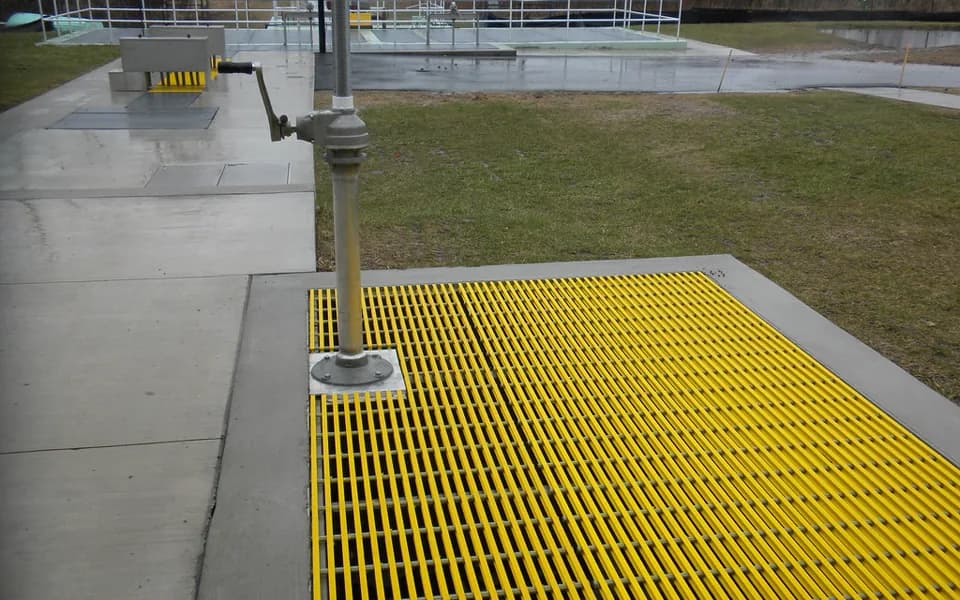
Compare FRP Grating sourcing evidence
Product-linked records and company-catalog candidates are labeled separately. Catalog matches are discovery leads, not confirmed offers. Check the linked profile for company roles, sources and review history. Sponsored records are identified below.
| Supplier / location | Recorded product scope | Evidence basis | Product MOQ / lead time | Source |
|---|---|---|---|---|
| F1 Composites Chongqing, China Sponsored | FRP Grating | Product-linked directory record Order-specific documents required. Profile reviewed: | MOQ: request quotation Lead time: request quotation | Company website |
| Jiangsu Jiuding New Materials Co., Ltd. Rugao, Jiangsu, China | FRP Grating | Product-linked directory record Order-specific documents required. Profile reviewed: | 500 kg 35 days; reconfirm for this order | Company website |
| Hengshui Jrain FRP Co., Ltd. Hengshui, Hebei, China | FRP Grating | Product-linked directory record Order-specific documents required. Profile reviewed: | MOQ: request quotation Lead time: request quotation | Company website |
| Nanjing Hitech Composites Co., Ltd. Nanjing, Jiangsu, China | Fiberglass rebar, plates and grating | Company-catalog candidate Order-specific documents required. | MOQ: request quotation Lead time: request quotation | Company website |
| Nanjing Mingfeng Composite Materials Co., Ltd. Nanjing, Jiangsu, China | Molded fiberglass FRP grating; Pultruded fiberglass grating and cover panels | Company-catalog candidate Order-specific documents required. | MOQ: request quotation Lead time: request quotation | Company website |
| Nantong Jiusheng New Materials Technology Co., Ltd. Nantong, Jiangsu, China | Molded fiberglass-reinforced plastic (FRP) grating; Pultruded fiberglass-reinforced plastic (FRP) grating; 38×38, 40×40, 50×50 and 83×83 molded grating | Company-catalog candidate Order-specific documents required. | MOQ: request quotation Lead time: request quotation | Company website |
| Nantong Endura Composites Co., Ltd. Nantong, Jiangsu, China | Molded fiberglass FRP grating; Molded fiberglass FRP grating cover panels; Pultruded fiberglass FRP grating | Company-catalog candidate Order-specific documents required. | MOQ: request quotation Lead time: request quotation | Company website |
| Jiangsu Aulland New Material Technology Co., Ltd. Nantong, Jiangsu, China | Molded FRP fiberglass grating panels; Pultruded fiberglass grating panels; Phenolic FRP fiberglass grating | Company-catalog candidate Order-specific documents required. | MOQ: request quotation Lead time: request quotation | Company website |
| Dongguan Tstar Composites Co., Ltd. Dongguan, Guangdong, China | SMC, BMC and DMC molded grating, cable trays, enclosures and custom parts | Company-catalog candidate Order-specific documents required. | MOQ: request quotation Lead time: request quotation | Company website |
| Chongqing Dujiang Composites Co., Ltd. Chongqing, China | Fiberglass rods, rebar, tubes, gratings and structural profiles | Company-catalog candidate Order-specific documents required. | MOQ: request quotation Lead time: request quotation | Company website |
| Nanjing Spare Composites Yizheng, Yangzhou, Jiangsu, China | Pultruded and molded FRP grating, decking and covers | Company-catalog candidate Order-specific documents required. | MOQ: request quotation Lead time: request quotation | Company website |
| Hebei Weitong FRP Co., Ltd. Hengshui, Hebei, China | FRP grating, cable tray, angles, channels and special-shaped parts | Company-catalog candidate Order-specific documents required. | MOQ: request quotation Lead time: request quotation | Company website |
| Shenzhen Hongfu Tongxin Technology Co., Ltd. Shenzhen, Guangdong, China | Molded FRP grating | Company-catalog candidate Order-specific documents required. | MOQ: request quotation Lead time: request quotation | Company website |
| Sino Composite Structures Co., Ltd. Wuxi, Jiangsu, China | Molded and pultruded FRP grating, including phenolic grating; Grating clips and installation accessories | Company-catalog candidate Order-specific documents required. | MOQ: request quotation Lead time: request quotation | Company website |
| Sinauva Composites Co., Ltd. Fengtai, Beijing, China | Pultruded fiberglass and carbon-fiber profiles and fiberglass grating | Company-catalog candidate Order-specific documents required. | MOQ: request quotation Lead time: request quotation | Company website |
| Hebei Tengjun FRP Co., Ltd. Zaoqiang, Hengshui, Hebei, China | Molded and pultruded FRP grating, covers and platform components | Company-catalog candidate Order-specific documents required. | MOQ: request quotation Lead time: request quotation | Company website |
Prepare a FRP grating RFQ
Send the same drawing revision, quantity and destination to each shortlisted supplier. Ask for an evidence reference and any deviation against every requirement.
- Molded or pultruded construction
- Panel depth, mesh, usable dimensions and cut plan
- Resin, surface and colour
- Support span, load cases and deflection limit
- Fire, slip and exposure requirements
- Clips, edge sealing, packing and inspection
Product-family scope and evidence
GetFRP separates generally used engineering ranges from a supplier's commercial offer. Standards, properties and buying checks on this page define the questions for an RFQ; the linked company profiles identify the published source and the supplier- product relationship records the offer-specific evidence.
- Last editorial review
- 12 September 2026
- Supplier records linked
- 16
- Evidence status
- Rechecked per RFQ
Compare adjacent specifications before sending the RFQ
Specifications buyers and suppliers share
| Field | Typical range | Sourcing note |
|---|---|---|
| Process | Molded or pultruded | Do not treat the two constructions as interchangeable in structural checks. |
| Panel depth | 25 / 30 / 38 / 50 mm | Confirm finished depth, tolerance and support span. |
| Mesh | 38 × 38 mm and micro-mesh options | State clear opening and accessibility requirement. |
| Resin | Ortho / iso / vinyl ester / phenolic | Match the resin to chemical and fire exposure. |
| Surface | Concave / grit / covered / conductive | Specify slip, cleaning and static-control needs. |
| Evidence | Load table, fire report, resin certificate, MTC | Require report numbers and scope before approval. |
When evaluating FRP grating suppliers, tie every load table and fire report to the offered construction, depth, resin, surface and support span. Then freeze cut plans, edge sealing, clips, inspection criteria and export packing before comparing landed quotations.
China’s FRP grating supply base covers molded panels, pultruded load-bearing panels, stair treads, trench covers and custom-cut assemblies. The first sourcing decision is not factory size but service condition: orthophthalic polyester is common for general industrial walkways, isophthalic systems improve chemical resistance, vinyl ester is selected for aggressive process environments, and phenolic systems are considered when smoke and flame performance dominate. A useful RFQ therefore names the resin family, load case, support span, surface treatment and destination standard instead of asking only for a panel price.
Export-ready factories differ most in their control of glass content, cure, bar geometry, dimensional tolerance and traceability. For molded grating, buyers should confirm mesh pattern, overall depth, load-bar thickness and whether the quoted size is the nominal mold size or the finished cut panel. For pultruded grating, confirm bearing-bar pitch, cross-rod construction and the test basis for published load tables. CE documents, ISO 9001 certificates and test reports should always be checked for the legal entity, product scope and validity date rather than accepted as logo files.
GetFRP exposes public company profiles and capability evidence for first-pass comparison. A procurement team can compare documented process, relevant certifications, production region, scale tier and the ability to supply the requested resin and surface before contacting a factory. Once the specification is stable, the sourcing desk can request matched samples, confirm current test evidence and arrange pre-shipment inspection against the same acceptance criteria used in the RFQ.
Suppliers connected to FRP Grating
Review the evidence table above to distinguish product-linked records from company-catalog candidates. Company verification does not certify every offered specification. Request current product-level documents.

According to its official website, F1 Composites is FengDu New Material's international export company. It supplies pultruded FRP profiles, gratings, fiberglass window and door systems, and custom pultrusions for overseas projects, with English-language engineering, quality documentation, export coordination and international delivery support.

Jiuding's official English export site describes the business as Jiuding New Material Co., Ltd., formerly Jiangsu Jiuding New Material Co., Ltd. The company states that it was established in 1994 and listed on the Shenzhen Stock Exchange in 2007 under stock code 002201. Its published scope covers fiberglass yarn and fabrics, grinding-wheel reinforcement materials, FRP products, pultruded profiles, gratings, flanges and custom thermoset composite components.

JRain FRP is a composite-products manufacturer in Hengshui, Hebei. The company states that it has manufactured FRP products since 2008 and operates an approximately 5,000 m² workshop with winding equipment, vacuum equipment, molds, a laboratory and FRP test equipment. Its portfolio covers industrial tanks, piping and fittings, scrubbers, grating accessories, dual-laminate products, custom industrial parts and winding equipment.

Nanjing Hitech Composites Co., Ltd. publishes an integrated HICOMA and Lica offer spanning pultruded carbon- and glass-fiber profiles, high-performance reinforcement fabrics and structural adhesives. Its current official catalog explicitly lists carbon-fiber plate, rod, tube, channel, rebar and prestressed plate systems; fiberglass beams, channels, angles, tubes, plates, rebar and grating; carbon- and glass-fiber fabrics; and bonding products for wind blades, carbon plate and civil structures. The China Composites Expo directory independently supports the Nanjing exhibitor identity and its pultruded-composite and epoxy-adhesive scope. GetFRP therefore assigns only demand phrases supported by those actual products, including carbon-fiber products, plates, rods, tubes and fabrics, pultruded fiberglass profiles and fiberglass grating. An application, system or performance label is not treated as a substitute for the offered grade, section drawing, laminate architecture, adhesive TDS or project engineering.
Nanjing Mingfeng Composite Materials Co., Ltd. says on its official website that it was founded in 2002 and manufactures pultruded and molded fiberglass products. The current catalog explicitly lists round and rectangular tube, rod, channel, I-beam, molded and pultruded grating, insulation ladders, tool handles, epoxy fiberglass rod, guardrail, flagpole, greenhouse support and other custom products. The China Composites Expo N directory also supports the exhibitor identity and its profile, tube, grating, ladder, handle, radome and molded-part scope. GetFRP maps fiberglass grating, pultruded fiberglass profiles and fiberglass-reinforced pipe demand only to those actual catalog items. Educational articles on the site discuss broader FRP applications such as tanks, cooling towers and flues; they are not treated as proof that Mingfeng currently manufactures every discussed product.

Nantong Jiusheng New Materials Technology Co., Ltd. publishes a POWERGRID portfolio of molded fiberglass-reinforced plastic grating, pultruded fiberglass grating, pultruded structural profiles, compression-molded and hand-lay-up FRP products, product molds and grating installation accessories. Its current site exposes mesh dimensions, surface options, mechanical and corrosion tables and installation content, while the official company profile gives a founding date of 16 April 1998. The second page of the China Composites Expo N directory independently lists Nantong Jiusheng. GetFRP therefore assigns demand phrases such as fiberglass grating, FRP grating and pultruded fiberglass only to the corresponding published products. Industrial, municipal, building, water-treatment and power-project examples illustrate use; they do not expand the catalog into every structure shown in a case study or replace project engineering and acceptance evidence.

Nantong Endura Composites Co., Ltd. supplies molded fiberglass FRP grating, grating cover panels, pultruded grating and pultruded structural profiles under the Endura identity, together with pipe, tank and rotational structures made through an integrated pultrusion-and-winding route. The current official site describes glass reinforcement with unsaturated resin and places these families in chemical platforms, municipal walkways, wastewater treatment, photovoltaic maintenance, building and power applications. The China Composites Expo directory independently supports the exhibitor identity and its grating, cover, profile and engineering-service scope. GetFRP assigns only product-demand phrases that the official catalog actually supports: fiberglass and FRP grating, pultruded fiberglass profiles and fiberglass-reinforced pipe. Corrosion, load, fire, electrical or service-life performance must be checked against the selected resin, reinforcement architecture, section, thickness, span and current product-specific evidence. No establishment year, certification or approval is inferred from a website copyright line.

Jiangsu Aulland New Material Technology Co., Ltd. is a Nantong supplier of FRP grating, pultruded fiberglass profiles and access structures. Its current official product pages and the 2026 China Composites Expo directory support molded grating, pultruded grating, phenolic grating, micromesh and covered panels, I- and H-beams, flat bars, tubes, kick plates, handrails, stair treads, ladders and custom sections. GetFRP therefore assigns measured-demand phrases including fiberglass grating, FRP grating, fiberglass pultruded grating, molded FRP grating and pultruded fiberglass to explicit offers. Hand lay-up or pultrusion capability is not expanded into pipe, sheet or rebar products that the reviewed catalog did not publish. The English subdomain was intermittently unavailable during review, while the official Chinese domain remained accessible. The complete current logo was downloaded on 2026-08-26 from the exact OMO asset referenced by the official header, trimmed only to remove transparent canvas, and stored locally by GetFRP. ASTM E84, ABS and ISO 9001 references remain company claims because certificate files aligned to the legal entity, address, scope, number and validity date were not verified.

Dongguan Tstar Composites Co., Ltd. is a Dongguan, Guangdong manufacturer of carbon-fiber and fiberglass products. China Composites Expo lists the full Chinese entity and says it was established in 2012 with pultrusion, pull-braiding, roll wrapping, prepreg compression molding, SMC/BMC, coating and CNC operations. The current official site separately publishes carbon-fiber tube, rod, sheet and profile families; fiberglass tube, rod, flat-bar and profile families; and process directories for pultrusion, roll wrapping, compression molding and SMC/BMC/DMC, plus sports and outdoor products. Its fishing page specifically shows a telescopic fiberglass fishing product rather than a carbon-fiber fishing rod. GetFRP therefore injects only supported product keywords and does not infer an unlisted product from an adjacent category.

Chongqing Dujiang Composites Co., Ltd. states that the current company name was adopted in 2002 and traces its fiberglass and FRP operating history to 1980. Its published catalog spans fiberglass reinforcements, thermoset resins, FRP profiles, carbon- and aramid-fiber materials, and related auxiliaries. The company reports 289 employees, approximately 50,000 m² of plant space, one-stop sourcing and OEM/ODM services. Its official sites publish a Yubei office address and a separate Beibei production address; buyers should verify the contracting entity, actual production site, product origin and quality-responsibility chain through the business license, factory audit and order-specific documents.

SPARE's Chinese website presents the business as Nanjing Spare New Materials Co., Ltd., while its official English export site operates under the Nanjing Spare Composites brand and names Nanjing Spare Composites Yizheng Co., Ltd. in the site footer. The company's published history says Nanjing Spare was founded in May 1995 and the Yizheng company was established in 2011. Its public product scope centers on pultruded glass-fiber composite profiles, gratings, bridge and infrastructure components, with custom development, machining, testing and installation support.

Hebei Weitong FRP Co., Ltd. is based in Jizhou District, Hengshui, Hebei. Its official English website states that the company was established on April 30, 2015 and operates on more than 20,000 m², including approximately 11,000 m² of production workshops, with research, design and manufacturing functions. The published range covers FRP pipe, tanks, towers and flues, fittings, grating and pultruded profiles, plus FRP production equipment, molds and raw materials. Its scale, staffing, capacity, patent, customer and export statements are company-published; buyers should independently confirm them through the business license, factory audit, order references and traceable quality records.

Shenzhen Hongfu Tongxin Technology Co., Ltd. describes itself on its official website as a manufacturer of fiberglass and plastic products and also uses the FORE / Foreth Industrial brand identity. The company publishes an FRP production factory in Dongguan and a separate plastic-sheet extrusion and vacuum-forming factory in Foshan. Its listed FRP range includes flat sheets, sandwich panels, molded grating, pultruded profiles, roofing sheets and SMC/BMC manhole covers, while the published commercial contact address is in Shenzhen, Guangdong.

Sino Composite Structures Co., Ltd. states on its official website that it has operated in the FRP business since 2002 and is based in Wuxi, Jiangsu. Beginning with molded FRP grating, its published range now covers molded, pultruded and phenolic grating; pultruded structural profiles; handrail and ladder systems; cable tray; fiberglass rebar; manhole covers; continuous-winding pipe; poles; marine tubes; and installation accessories. The company also publishes project design, product selection, pre-assembly and transport support.

Sinauva Composites Co., Ltd. presents itself as a Beijing-based developer, manufacturer and exporter of fiberglass-composite panels, structural foam cores, reinforcement materials and finished FRP products. Its official catalog spans sandwich panels and FRP skins; rovings, mats and multiaxial or advanced fabrics; pultruded profiles; grating; pipe fittings; and custom composite parts. The company also states that it works with associated factories to broaden the range of related fiberglass products available to buyers.

Hebei Tengjun FRP Co., Ltd.'s official English website describes an integrated FRP business covering product development, design, manufacturing, processing and sales from Zaoqiang County in Hengshui, Hebei. Its current directory spans FRP grating, flat sheet, cable tray, storage tanks, pultruded profiles, manhole covers, marker posts, water tanks, pipes, SMC products, cooling towers and fiberglass rebar. The company states that selected products reach more than 60 countries and regions; this export-market statement is company-published and has not been independently verified by GetFRP.
Validate the material, supplier and landed cost
No. EN 13706 is a specification for pultruded profiles and includes designation, test methods and mechanical property classes. It is not a universal fire classification for grating. Ask for the product-specific fire or smoke report required by the project, identify the tested resin and construction, and verify that the reported specimen represents the offered panel.
Molded grating provides two-directional continuity, flexible cutting and broad corrosion-resistant resin choices. Pultruded grating is usually selected when high unidirectional stiffness, longer spans or repeatable load-bar geometry matter. The correct choice depends on span, load, cut-outs, chemical exposure and deflection limit—not headline price per square metre.
Include process type, panel and mesh dimensions, resin, colour, surface, design load, support span, deflection limit, fire or smoke requirement, cut plan, clips, quantity, packaging, destination and Incoterm. Ask the supplier to identify deviations explicitly and attach current test evidence.
The shortlist is screened for legal identity, manufacturing process, relevant product capability, certification scope, scale tier and export readiness. Before an order, documents are rechecked for validity and the inspection plan is tied to the approved specification, sample and acceptance criteria.