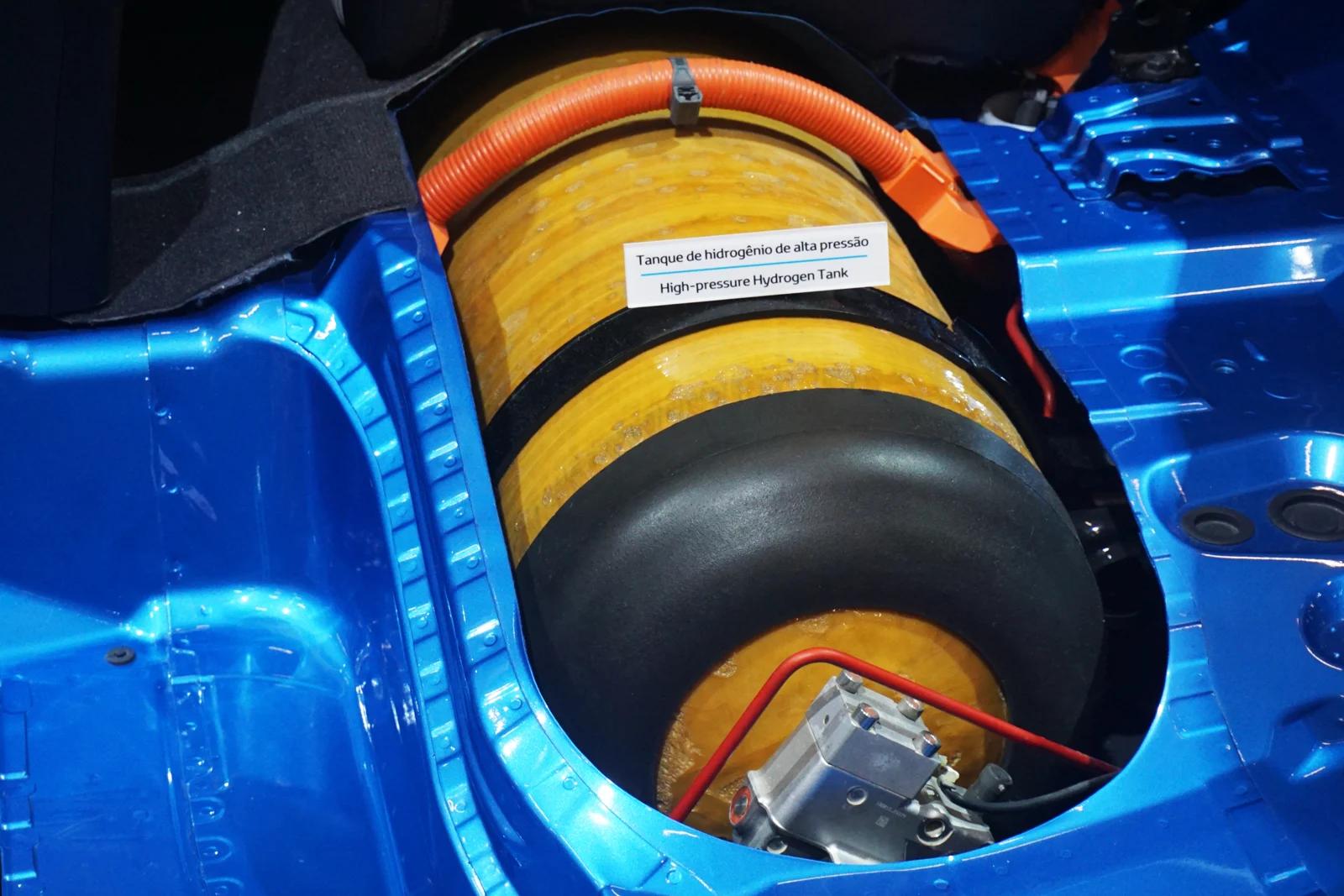
1. A growing vehicle base and a much larger hydrogen economy are different markets
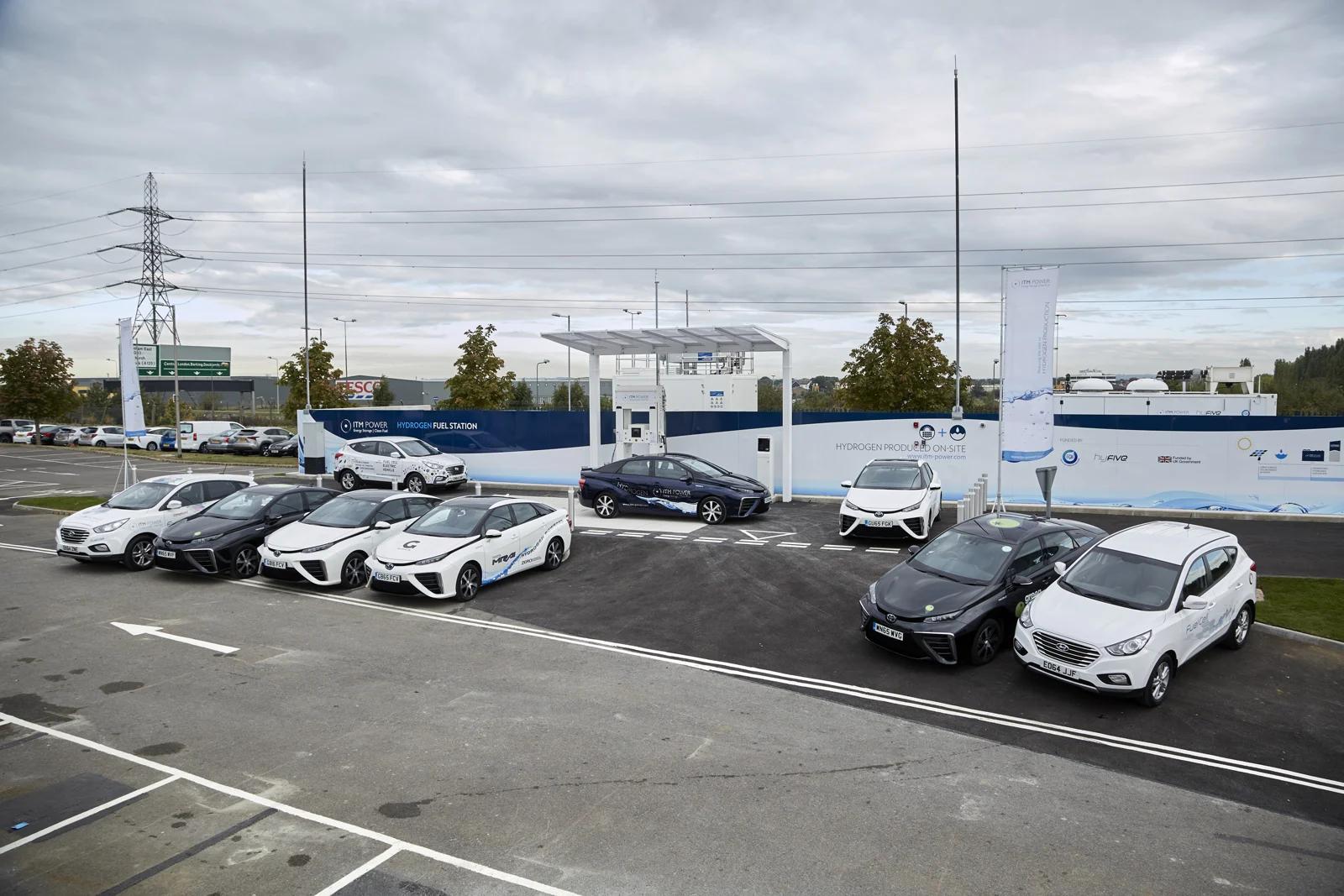
The National Energy Administration's China Hydrogen Development Report 2026 records about 32,000 fuel-cell vehicles at the end of 2025, nearly 8,000 vehicles promoted during the year and more than 590 hydrogen stations cumulatively built. The report was published in August 2026 and describes 2025 activity. Its vehicle-promotion measure should not be relabeled as a wholesale-sales series, and its built-station count does not establish how many stations were operating. [S1]
These indicators identify an expanding application base, but they do not directly measure China's onboard hydrogen-cylinder market. A vehicle may use several containers with different dimensions and capacities; a storage-system sale can include valves, piping, supports and related equipment. Replacements, exports and inventory movements also sit outside a simple count of newly introduced domestic vehicles. No reliable public national cylinder-only revenue total or Type IV penetration rate was established in this research. We therefore use named company observations and explicit product boundaries rather than manufacture a national TAM.
The same NEA report puts annual hydrogen production above 39 million tonnes. [S1] That large upstream number describes a different economic activity from vehicle fuel storage. Applying an arbitrary cylinder percentage to national hydrogen output would confuse industrial consumption, logistics equipment, stationary infrastructure and onboard fuel systems. For a composite manufacturer, the commercially relevant question is which qualified container or system a customer actually needs, in what quantities, and at what point in its vehicle program.
GetFRP's market interpretation is that opportunity should be assessed through product programs and repeat deliveries. Broad hydrogen investment can support long-term development while individual suppliers face delayed orders, changing customer mix or a shift toward other equipment. The following company evidence illustrates that distinction. It is particularly useful for buyers deciding whether a supplier's announced expansion is backed by relevant production experience and a sustainable order book.
| Measure | What it describes | What it cannot establish alone |
|---|---|---|
| Fuel-cell vehicle stock | Vehicles in the reported fleet at a date | New annual cylinder orders or replacement demand |
| Stations built | Cumulative infrastructure construction | Operating availability, throughput or vehicle-cylinder revenue |
| Cylinder shipments | Container units delivered within a stated scope | Complete-system quantities or nationwide material share |
| Supply-system revenue | A supplier's defined product-revenue category | Bare-cylinder revenue or Type IV-only sales |
| Factory nameplate capacity | Stated potential output under assumptions | Actual accepted production or customer demand |
Source: GetFRP market-definition framework; reporting examples [S1][S2][S4].
2. Commercial-vehicle demand must be connected to a usable refueling network
An onboard storage system is purchased to support a vehicle duty cycle. The buyer needs to know the required usable hydrogen, route length, refueling opportunities, packaging envelope and maintenance arrangements. A fleet with access to a dependable depot has a different operating problem from vehicles traveling among several public stations. A national station count cannot resolve that distinction. Market research should therefore identify the route or fleet program behind an enquiry instead of treating every planned fuel-cell vehicle as an immediately accessible cylinder order.
For Chinese commercial-vehicle supply chains, a useful customer map separates the vehicle OEM, storage-system integrator, container manufacturer and fleet operator. Their decisions are connected but not identical. The OEM determines vehicle integration requirements; the system integrator coordinates the supplied assembly; the container maker supports its qualified product; the fleet determines whether the planned operation is commercially workable. The contract should make those responsibilities visible, particularly when a trading company or export intermediary handles the purchase.
A practical opportunity file records the vehicle platform, intended service, program stage, required evidence, purchasing entity and planned acceptance schedule. Distinguish a development prototype from a released production order, and separate a demonstration delivery from a repeat fleet contract. That allows a supplier to assess engineering workload and cash requirements before reserving manufacturing capacity. It also helps an importer compare suppliers on relevant experience rather than on the largest cylinder or most impressive factory expansion in a presentation.

3. Guofu's accounts show why hydrogen-equipment growth cannot be assigned to cylinders
Guofu Hydrogen's audited 2025 report separates revenue into three product categories. Vehicle-mounted high-pressure hydrogen supply systems and related products generated RMB 158.487 million, down from RMB 279.089 million in 2024. Electrolysis equipment moved in the opposite direction. The company reports one hydrogen-equipment operating segment for accounting purposes, so these should be called product-revenue categories rather than independent reportable segments. [S2]
The first-half update makes the product shift clearer. In the unaudited six months to June 2026, the vehicle-system category generated RMB 21.553 million, compared with RMB 91.295 million in the corresponding 2025 period. Group revenue declined only 4.5%, because the other categories followed different paths. [S3] The charts use full-year comparisons and first-half comparisons separately. Multiplying a half-year result into an annual forecast would require assumptions that are not established here.
This evidence supports a specific conclusion: a broad hydrogen-equipment portfolio can change substantially while its headline revenue moves much less. It does not prove a nationwide collapse in onboard-cylinder demand, a fall in average cylinder prices or a shift between Type III and Type IV. The vehicle category includes complete supply systems and related products, and neither filing provides a clean cylinder-only material split. Readers should resist extracting a national market narrative from a single issuer's product mix.
↔ Scroll horizontally to see the full chart and data table.
Source: [S2]. Audited issuer product-revenue categories, each including related products. Vehicle systems are not bare cylinders or Type IV-only sales. Group totals: RMB 458.609m and 346.374m. Display labels abbreviated; no national market share inferred.
View the chart data and evidence
| Series | Category | Value | Unit | Evidence / value basis | Reported range | Point note |
|---|---|---|---|---|---|---|
| 2024 | Vehicle systems | 279.089 | m | Company data | — | — |
| 2024 | Station equipment | 147.945 | m | Company data | — | — |
| 2024 | Electrolysis | 31.575 | m | Company data | — | — |
| 2025 | Vehicle systems | 158.487 | m | Company data | — | — |
| 2025 | Station equipment | 88.823 | m | Company data | — | — |
| 2025 | Electrolysis | 99.064 | m | Company data | — | — |
↔ Scroll horizontally to see the full chart and data table.
Source: [S3]. Unaudited same-period comparison. Group totals: RMB 108.956m and 104.036m. These six-month figures are not annualized; categories include related products.
View the chart data and evidence
| Series | Category | Value | Unit | Evidence / value basis | Reported range | Point note |
|---|---|---|---|---|---|---|
| H1 2025 | Vehicle systems | 91.295 | m | Company data | — | — |
| H1 2025 | Station equipment | 13.993 | m | Company data | — | — |
| H1 2025 | Electrolysis | 3.668 | m | Company data | — | — |
| H1 2026 | Vehicle systems | 21.553 | m | Company data | — | — |
| H1 2026 | Station equipment | 21.712 | m | Company data | — | — |
| H1 2026 | Electrolysis | 60.771 | m | Company data | — | — |
4. Actual exports and system deliveries are more informative than a capacity headline
CIMC Enric's 2025 results announcement reports that the CIMC-Hexagon joint venture exported more than 800 Type IV high-pressure onboard hydrogen cylinders to Europe and the Middle East during the year. Separately, the group supplied more than 700 onboard hydrogen supply systems supporting the Greater Bay Area fuel-cell demonstration city cluster. These are company-reported actual deliveries, with different units and geographical scopes. Cylinders and systems cannot be added together or converted without knowing each system's configuration. [S4]
The commercial significance is evidence of an operating export channel alongside domestic system supply. It does not establish national Type IV penetration, the total addressable export market or approval for an unrelated vehicle configuration. A prospective customer should identify the model, manufacturing site and destination requirements behind the references. A shipment record is stronger evidence of execution than a planned production line, but it still needs to be connected to the product being offered.
Sinoma Science & Technology provides another useful production observation: its 2025 annual report records external sales of approximately 13,000 hydrogen-storage cylinders. The report does not identify all those units as Type IV or establish that every unit served onboard vehicle storage. Separately, it describes completion of a 70 MPa / 210 L Type IV product and demonstration installation on vehicles. A development milestone and an aggregate hydrogen-cylinder sales count answer different questions; they must not be combined into a model-specific shipment claim. [S15]
China sourcing should distinguish a qualified container purchase from a system-integration contract. In the first case, the buyer or its integrator retains responsibility for coordinating the remaining system. In the second, the supplier may provide a wider package of hardware and integration support. The quotation must state that boundary. Otherwise, one bidder's lower price may simply exclude brackets, valves, protection, engineering work or acceptance activities included by another bidder.
GetFRP would evaluate manufacturing capacity at the product-family level. Ask for accepted output, current production loading, relevant delivery records and the treatment of engineering changes. Counts of winding machines or announced annual cylinder capacity are not interchangeable across sizes, gases and applications. In particular, a factory making composite CNG products does not thereby disclose its hydrogen-cylinder output. The useful comparison is repeatable delivery of the specified, accepted construction within the customer's program schedule.
| Evidence | Observed scope | Next buyer question |
|---|---|---|
| Guofu annual and interim reports [S2][S3] | Vehicle supply-system and related-product revenue | Which part of the offered package is manufactured and qualified in-house? |
| CIMC-Hexagon exports [S4] | More than 800 onboard Type IV hydrogen cylinders in 2025 | Which product, destination and qualification configuration support the reference? |
| CIMC domestic system deliveries [S4] | More than 700 supply systems for a named demonstration cluster | What hardware and integration work were included in each system? |
| Sinoma actual hydrogen-cylinder sales [S15] | Approximately 13,000 units in 2025; type/application mix not disclosed here | Which construction and application account for the relevant delivery record? |
| Factory capacity announcement | Potential output under stated assumptions | What accepted production and customer orders demonstrate utilization? |
Source: [S2][S3][S4][S15]; GetFRP due-diligence questions. Examples are not a supplier ranking.
5. Type III and Type IV change the liner problem, not the need for qualification
Type III construction combines a metal liner with a fully wrapped composite structure. Type IV uses a polymer liner principally as a gas barrier, with the composite structure carrying the principal pressure load. The manufacturer's construction summary in Hexagon Purus's cylinder brochure illustrates this distinction. [S13] Type IV is not an all-plastic container: end interfaces and their connection to the liner and composite remain important parts of the construction.
For a metal-lined design, the assessment includes the liner's material, fatigue behavior and interaction with the overwrap. For a polymer-lined design, the relevant questions include gas permeation, sealing, processing quality and behavior under the qualified pressure and temperature history. Neither type label supplies a universal service rating or a guaranteed weight saving. The offered geometry, materials, interfaces and evidence determine whether the product is suitable for the intended vehicle system.
Chinese product standards make a more specific distinction than a generic Type III label. GB/T 35544-2025 concerns aluminum-lined carbon-fiber fully wrapped compressed-hydrogen vehicle cylinders, while GB/T 42612-2023 concerns plastic-lined construction. [S5][S6] The aluminum scope should not be silently extended to every possible metal liner. Similarly, a supplier's capability in one polymer or end-interface construction does not establish evidence for a materially different design.
The original diagram identifies the gas volume, liner, composite overwrap and metal end interface, then separates the container from the wider storage installation. It deliberately omits design dimensions and manufacturing parameters. For an RFQ, the useful drawing is the supplier's controlled product and assembly definition, with a clear correspondence to the qualification reports. A conceptual cross-section is an aid to understanding responsibilities, not a substitute for that documentation.
↔ Scroll horizontally to see the full diagram.
| Boundary | Type III emphasis | Type IV emphasis |
|---|---|---|
| Liner | Specified metal and its load-sharing / barrier role | Specified polymer, processing and barrier / sealing role |
| End interface | Liner, fitting and composite interaction | Polymer-to-metal interface and sealing construction |
| Composite structure | Qualified reinforcement, matrix and process | Qualified reinforcement, matrix and process |
| Acceptance | Evidence for the offered complete construction | Evidence for the offered complete construction |
Source: Product scopes [S5][S6] and manufacturer construction guidance [S13]; no universal performance ranking.
6. Update the standards register before issuing a new RFQ
Two edition checks materially change a new sourcing review. China's official catalogue lists GB/T 35544-2025 as current, effective from 1 December 2025, replacing the 2017 edition. DIN's official catalogue identifies ISO 19881:2025, published in June 2025, as current and replacing ISO 19881:2018. [S5][S7] A supplier document referring only to the older year should therefore prompt an applicability review against the contract; an old report is not automatically evidence of every requirement in a later edition.
GB/T 42612-2023 remains the identified Chinese plastic-lined vehicle-cylinder reference, effective from 1 June 2024. [S6] The distinction between product standard and approval scope is equally important. The UN R134 text published in the EU Official Journal separates compressed-hydrogen storage systems, specific components and vehicle installation. [S8] A container standard, a component report and a vehicle approval answer different questions. The purchasing team should not accept a list of familiar acronyms as a complete compliance matrix.
The R134 source cited here is a dated 2019 publication incorporating the original series through Supplement 3. It is used to explain the system/component/vehicle boundaries, not presented as the latest consolidated rule for every 2026 destination. Obtain the applicable series, amendments and acceptance route from the responsible approval body for the actual project. This article does not assert that a single international reference supplies universal permission to place a vehicle or transport module into service.
The 2023 Amendment 1 to UN Global Technical Regulation No. 13 provides a further distinction. Its explanatory text recognizes national or regional requirements for road use and additional type-approval requirements. [S14] A global technical regulation helps harmonize technical requirements; it is not a single worldwide vehicle certificate. The cited amendment is a dated text, not a claim that every subsequent amendment or destination rule has been reviewed. Contract evidence must identify how the relevant jurisdiction applies the technical provisions.
A workable standards register identifies the product, destination, contractual edition, applicable evidence and any unresolved deviations. Keep onboard vehicle fuel storage separate from bulk gas transport, stationary equipment and CNG applications. If the buyer changes the intended use, the qualification review must follow that change. Public catalogue descriptions establish edition identity and scope; full controlled standards and the relevant approval process are still needed to execute a project.
| Reference | Identified role | What to verify for the order |
|---|---|---|
| GB/T 35544-2025 [S5] | Chinese aluminum-lined carbon-fiber vehicle hydrogen cylinders | Current construction, report applicability and contractual requirements |
| GB/T 42612-2023 [S6] | Chinese plastic-lined carbon-fiber vehicle hydrogen cylinders | Specific liner / interface construction and relevant qualification |
| ISO 19881:2025 [S7] | Gaseous-hydrogen land-vehicle fuel containers | Current edition; container evidence is not the complete vehicle approval |
| UN R134, dated text reviewed [S8] | Storage systems, specific components and vehicle installation | Destination's applicable series/amendments and accepted approval route |
| UN GTR 13, Amendment 1 (2023) [S14] | Harmonized technical provisions; national/regional implementation | Applicable local acceptance requirements; no universal GTR certificate |
Source: Official national-standard catalogue, DIN catalogue, EUR-Lex and UN document repository. The R134 source is identified by its publication vintage, not claimed to be the latest consolidated text.
7. The manufacturing advantage must survive material and process changes
The US Department of Energy's physical-storage guidance treats both the composite container and balance-of-plant equipment as contributors to a compressed-hydrogen storage system. [S9] This is a useful starting point for understanding the supply chain. It is not a current Chinese cost benchmark: the historical cost illustrations on that page use their own dated price basis and production-volume assumptions. A buyer should avoid transplanting an old high-volume model into a quotation for an early-stage vehicle program.
At the manufacturing level, the review should connect reinforcement, resin, liner and end-interface materials to a controlled process. Request how the manufacturer records material lots, impregnation and curing, dimensional checks and relevant production deviations. The important question is whether the accepted production construction remains the one supported by the evidence. Purchasing a nominally similar fiber or polymer does not by itself establish that a substitution is acceptable within the existing qualified design.
Hexagon Purus describes several testing capabilities for its Type IV cylinder business, including pressure, leakage, burst, fire and permeation-related evaluation. [S12] Such a capability statement helps identify what to ask during supplier review, but the actual order needs reports and acceptance records tied to its product. Equipment ownership, a laboratory photograph or a marketing list of test names does not show which samples were evaluated, under which edition, or how an altered size or construction was justified.
For a Chinese supplier seeking repeat export business, disciplined change control can be a commercial advantage. Define which changes require customer review, how affected production is traced and how evidence is retained. Include outsourced liner, fitting or assembly operations in that system. The practical objective is to let an importer or vehicle integrator reconstruct the product history without relying on an informal assurance after shipment. That capability supports consistent deliveries as programs move from prototypes to repeat production.
8. Qualify the installed system, including interfaces and thermal relief
The compressed-hydrogen storage-system definition in the reviewed R134 text includes the container and the relevant pressure-relief and shutoff devices. [S8] The wider vehicle installation adds further interfaces and responsibilities. This is why a strong container report cannot automatically establish that an arbitrary collection of approved components forms an acceptable vehicle system. The offered assembly, the applicable reports and the intended installation need to be connected explicitly.
Leakage and permeation should be treated as different technical questions. A local sealing or connection path is not the same phenomenon as gas transport through a material. Likewise, a single pressure test does not describe the complete durability history. The evidence review should follow the required sequence and conditions for the actual product, including the relevant environmental, cycling, gas-containment and fire-behavior assessments. The purchaser needs an applicability explanation, not a universal test multiplier copied from a different cylinder family.
A thermally activated pressure relief device responds to thermal conditions; it is distinct from a regulator controlling normal supply pressure. The reviewed regulation describes its non-reclosing release function. [S8] Procurement should verify that device identity, position and discharge configuration match the assessed system. The diagram places the relief connection on the stored-gas side and deliberately omits detailed installation instructions. Component selection and installation remain part of the qualified engineering package.
For fleet and export projects, define the handover package before the order is placed. It should identify the supplied configuration, applicable evidence, order acceptance, handling and service instructions, installation responsibilities and support arrangements. Inspection or rejection criteria in service must come from the approved manufacturer instructions and applicable requirements. They should not be improvised from the artificial flaw dimensions used in a qualification test. This makes the distinction between initial acceptance and subsequent operation clear to both parties.
| Level | Required connection | Common comparison error |
|---|---|---|
| Material | Grade / formulation and lot tied to the qualified construction | Using fiber strength as an assembly rating |
| Container | Drawing, manufacturing process and applicable test evidence | Assuming one report covers every size or liner change |
| Storage system | Containers, devices, interfaces and supplied configuration | Combining component certificates into an assumed system approval |
| Vehicle installation | Mounting, filling, discharge, protection and acceptance route | Treating container compliance as complete vehicle acceptance |
Source: GetFRP evidence framework; system boundaries informed by [S8][S10][S13].
9. Compare usable hydrogen against the mass of the complete system
Storage efficiency is easy to overstate when quotations use different boundaries. DOE's onboard-storage target definitions use usable hydrogen delivered to the fuel-cell system and a complete system mass that includes stored hydrogen and supporting hardware. The cited targets are development metrics, not proof that a supplier has achieved them or mandatory approval thresholds. [S10] For procurement, the value of the definition is a consistent comparison between offers.
Consider two explicitly hypothetical packages with the same 10 kg of usable hydrogen and 10.5 kg of hydrogen stored at the defined full condition. Package A has 239.5 kg of dry system hardware and B has 189.5 kg. Their full system masses are therefore 250 kg and 200 kg. Dividing by usable hydrogen gives 25 and 20 kg of complete system per kilogram of usable hydrogen; the corresponding usable-hydrogen mass fractions are 4% and 5%. The inputs describe no named product and are not assigned to Type III or Type IV.
The 50 kg difference is meaningful only because the usable capacity and hardware boundary are held constant. A bare-container mass comparison could conceal differences in brackets, valves, protection or other equipment. Even a verified system mass saving does not automatically become additional vehicle payload: axle loads, packaging, vehicle mass limits and other integration constraints still matter. Keep these decisions separate when assessing a claimed lightweighting benefit.
Toyota's 2020 second-generation Mirai release provides a real example of why packaging belongs in the discussion: it reports hydrogen capacity increasing from 4.6 to 5.6 kg while describing the new vehicle arrangement and efficiency improvements. [S11] That is a dated passenger-car example, not a Chinese commercial-vehicle benchmark, and the stated capacity should not be relabeled as usable hydrogen without its definition. Pressure, capacity, package size, system mass and vehicle range are related variables, not interchangeable performance claims.
↔ Scroll horizontally to see the full chart and data table.
Source: GetFRP hypothetical calculation; consistent system-boundary principle from [S10].. Usable hydrogen 10 kg and stored hydrogen 10.5 kg in both packages. Dry hardware 239.5 / 189.5 kg; full system mass 250 / 200 kg. Ratios 250/10 and 200/10. Not measured products, not a Type III/IV ranking or a payload guarantee.
View the chart data and evidence
| Series | Category | Value | Unit | Evidence / value basis | Reported range | Point note |
|---|---|---|---|---|---|---|
| — | Package A | 25 | kg system / kg usable H2 | GetFRP estimate | — | — |
| — | Package B | 20 | kg system / kg usable H2 | GetFRP estimate | — | — |
| Quantity | Package A assumption | Package B assumption |
|---|---|---|
| Usable hydrogen | 10 kg | 10 kg |
| Stored hydrogen at defined full condition | 10.5 kg | 10.5 kg |
| All dry system hardware | 239.5 kg | 189.5 kg |
| Complete full system | 250 kg | 200 kg |
| Usable H2 / complete system mass | 4% | 5% |
Source: GetFRP assumptions and calculation, not supplier specifications. All relevant hardware is included consistently.
10. Capacity utilization can matter as much as a material-price saving
A new cylinder facility can have impressive nameplate capacity while its qualified customer programs remain small. This creates a commercial issue even when the manufacturing technology works: fixed costs must be recovered over accepted production. The historical company revenue changes discussed earlier make utilization a relevant due-diligence question, but they do not reveal any particular factory's cost structure. The following model isolates the effect with entirely invented inputs.
Assume an annual fixed manufacturing cost pool of RMB 12 million and a reference capacity of 20,000 accepted cylinders per year. At accepted output of 5,000, 10,000 and 15,000 units, the fixed-cost allocation is RMB 2,400, 1,200 and 800 per accepted cylinder. Output is defined after rejection for this illustration. The chart therefore compares 25%, 50% and 75% of the stated accepted-output reference capacity, without adding an undisclosed yield factor.
These values are not cylinder prices, industry averages or a prediction of margins. They exclude variable materials, other variable manufacturing costs, logistics, commercial expenses and any costs outside the defined fixed pool. The purpose is to show why a supplier cannot justify a low-volume quotation solely by citing a future factory scale. Actual product mix, operating hours, qualification work and accepted production must be considered before a high-volume cost model is relevant.
For procurement, ask what volume the offer assumes, whether tooling or development charges are separate, and how price changes if the vehicle program is delayed. For market entry, separate an initial engineering order from a credible repeat-production commitment. A phased production plan can be commercially more useful than a large expansion announcement when customer approval and demand remain uncertain. This is a decision about capital and execution discipline, not an argument that a particular cylinder construction is always cheaper.
↔ Scroll horizontally to see the full chart and data table.
Source: GetFRP scenario: assumed RMB 12m fixed annual cost divided by accepted annual output.. Reference capacity 20,000 accepted cylinders/year. All inputs hypothetical; same annual period and fixed pool. Variable costs and other excluded expenses must be added for a full cost model. Not market quotations or a Type III/IV cost comparison.
View the chart data and evidence
| Series | Category | Value | Unit | Evidence / value basis | Reported range | Point note |
|---|---|---|---|---|---|---|
| — | 25%: 5,000 | 2400 | RMB / accepted cylinder | GetFRP estimate | — | — |
| — | 50%: 10,000 | 1200 | RMB / accepted cylinder | GetFRP estimate | — | — |
| — | 75%: 15,000 | 800 | RMB / accepted cylinder | GetFRP estimate | — | — |
11. Enter through a defined product program and expand on repeat evidence
The evidence supports a selective China sourcing strategy. Vehicle deployment and infrastructure provide a market backdrop; issuer accounts show that realized equipment revenue can move differently; actual cylinder exports demonstrate a channel that still requires product-specific verification. A buyer should choose the contractual level it needs—container, storage system or wider integration support—and compare suppliers at that same level.
For a Chinese manufacturer, the next commercial milestone should be a repeatable, accepted product family attached to an identifiable customer program. Track qualification completion, accepted deliveries, repeat orders and the reasons projects do not convert. Expand sizes or applications only when the applicability of the evidence and the required engineering work are understood. That approach turns broad interest in hydrogen into a reviewable production and sales plan, while keeping vehicle-storage demand separate from the much larger industrial hydrogen economy.
Frequently asked questions
How large is China's onboard hydrogen-cylinder market?
This research did not establish a reliable national cylinder-only revenue total or Type IV share. Vehicle stock, cylinder units, complete-system revenue and factory capacity retain different scopes. The report uses official demand indicators and named issuer evidence instead of an invented TAM.
Does a fuel-cell vehicle count equal annual cylinder demand?
No. A stock count covers vehicles at a date. Annual cylinder demand also depends on vehicle configuration, new production, replacements, exports and inventories. The NEA's vehicle-promotion measure is not relabeled here as a wholesale-sales series. [S1]
Is Type IV always lighter or cheaper than Type III?
The type identifies construction. Compare qualified offers at the same usable hydrogen capacity, complete-system boundary and vehicle duty. The report's mass and cost charts are hypothetical illustrations, not universal Type III/IV performance claims.
Which standards have been updated?
The verified catalogues identify GB/T 35544-2025 and ISO 19881:2025 as current replacements for their earlier editions. GB/T 42612-2023 is the identified Chinese plastic-lined vehicle-cylinder reference. Confirm the contractual scope and applicable evidence. [S5][S6][S7]
Does a container test report approve the whole vehicle installation?
No. Container, component, storage-system and vehicle-installation evidence have different scopes. The offered assembly must be connected to the destination's applicable acceptance route. [S8]
Why distinguish usable hydrogen from stored hydrogen?
The amount deliverable to the fuel-cell system can differ from hydrogen stored at the defined full condition. A complete-system mass comparison also includes the relevant hardware and stored fuel. Keep those definitions consistent across offers. [S10]
What should a serious RFQ include?
Identify the vehicle program, destination, contractual product boundary, usable capacity, installation envelope, operating duty, applicable editions, evidence responsibilities, expected accepted quantities and delivery schedule. Request a controlled technical and commercial scope before comparing prices.
Sources and scope
Figures were cross-checked against primary documents where available; secondary citations are marked in each scope note. Company figures are reported as disclosed by the companies themselves. This note is an independent market assessment and not investment advice.
- [S1]NEA: China Hydrogen Development Report 2026, published 11 August 2026
Official report covering 2025: approximate vehicle stock, vehicles promoted, stations cumulatively built and hydrogen production. Indicators are not cylinder-market revenue.
- [S2]Guofu Hydrogen: annual report 2025, published 27 April 2026
Issuer PDF linked by its official IR site; audited product-revenue categories and 2024 comparatives, printed page 8. One accounting operating segment; vehicle category includes supply systems and related products.
- [S3]Guofu Hydrogen: interim report 2026, published 21 September 2026
Official IR-linked issuer PDF; unaudited H1 2026 product revenue with H1 2025 comparatives, printed page 6. No annualization.
- [S4]CIMC Enric: 2025 results announcement, 25 March 2026
Company reports more than 800 Type IV onboard hydrogen-cylinder exports and, separately, more than 700 supply-system deliveries supporting the Greater Bay Area demonstration cluster in 2025.
- [S5]SAMR catalogue: GB/T 35544-2025
Current aluminum-lined carbon-fiber fully wrapped compressed-hydrogen vehicle-cylinder standard; issued 29 August 2025, effective 1 December 2025; replaces 2017 edition.
- [S6]SAMR catalogue: GB/T 42612-2023
Current plastic-lined carbon-fiber fully wrapped compressed-hydrogen vehicle-cylinder reference; effective 1 June 2024. Public catalogue scope and status.
- [S7]DIN Media official catalogue: ISO 19881:2025
Gaseous hydrogen — Land vehicle fuel containers; June 2025 edition marked current and replacing ISO 19881:2018. Catalogue metadata, not a review of paid standard clauses.
- [S8]UN Regulation No 134: EU Official Journal publication 2019/795
Dated 17 May 2019 publication incorporating the original series through Supplement 3. Used for system/component/vehicle boundaries and TPRD definition; not claimed as the latest consolidated 2026 destination rule.
- [S9]US DOE: Physical Hydrogen Storage
Composite-container and balance-of-plant context. Historical cost models and dated target numbers on the page are not presented as current Chinese prices.
- [S10]US DOE: Technical Targets for Onboard Hydrogen Storage for Light-Duty Vehicles
Definitions of usable hydrogen and complete storage-system mass, including stored hydrogen and supporting hardware. Development targets are not supplier performance or mandatory approval thresholds.
- [S11]Toyota: launch of the second-generation Mirai, 9 December 2020
Dated manufacturer example of packaging and stated hydrogen capacity increasing from 4.6 to 5.6 kg; not relabeled as usable capacity or a Chinese commercial-vehicle benchmark.
- [S12]Hexagon Purus: hydrogen high-pressure Type 4 cylinders
Manufacturer product and testing-capability description, accessed 8 November 2026; a capability statement is not qualification of a particular order.
- [S13]Hexagon Purus: H2 Cylinders mobility and infrastructure brochure, 2024
Official product-page-linked brochure: liner construction on page 3 and distinction between cylinders and fuel-storage systems on page 7. Supplier claims retain their scope.
- [S14]United Nations: UN GTR No. 13, Amendment 1, 2023
Global Registry entry of 21 June 2023, document dated 17 July 2023. Explanatory paragraphs 48–49 identify national/regional road-use and type-approval requirements. Dated amendment, not a claim of complete current destination coverage.
- [S15]Sinoma Science & Technology: annual report 2025, 20 March 2026
Official issuer disclosure, printed page 12: approximately 13,000 hydrogen-storage cylinders sold externally in 2025, without attributing all units to Type IV or onboard use; separate 70 MPa / 210 L Type IV development and vehicle-demonstration milestone.
Image provenance and usage terms appear in each caption; see image credits. Submit a source correction.