1. Which tooling material is best for composite molds? The comparison in one table
A composite tool has to do four things at once: hold the part shape at cure temperature, stay vacuum-tight, move heat into and out of the laminate at a controlled rate, and survive the number of cycles the program needs. The material families below trade those four against cost and lead time, and no single one wins everywhere. The decisive number for hot-cured carbon parts is the coefficient of thermal expansion (CTE). Gurit's processing guide states the rule plainly: the tool's CTE should match the component's, carbon part on carbon tool [S14].
The values in Table 1 are typical datasheet figures with their stated temperature ranges, not specification limits. Invar 36 expands 1.5 µm/m·°C between 20 and 100 °C but 2.6 between 20 and 200 °C and 5.5 between 20 and 300 °C, because the alloy loses its low-expansion behavior above an inflection near 220 °C [S1]. A carbon/epoxy tool built from Toray's HX56 tooling prepreg in a 1-8-1 quasi-isotropic stack measures 3.2 µm/m·°C [S2]; Hexcel's carbon/BMI HexTool M61 measures 4.0 in-plane by ASTM E289 [S4]. Against those, a prehardened P20-type mold steel expands 12.7 µm/m·°C from 20 to 200 °C [S6] and an aluminum mold plate 23 µm/m·°C from 20 to 100 °C [S5]. Tooling boards sit far higher: 34.7 to 55 µm/m·°C depending on grade [S8][S9][S10][S11].
Read the chart as a ranking of fit for hot-cured carbon parts, not of quality. Aluminum's conductivity of 165 W/m·°C, against 10 for Invar, makes it the faster tool to heat and cool [S1][S5], which is why it remains common for RTM, thermoforming and low-temperature work where expansion can be compensated in the cavity.
↔ Scroll horizontally to see the full chart and data table.
Source: Manufacturer datasheets: Special Metals, Toray, Hexcel, Uddeholm, Toyo Tanso, Sika, RAMPF, Huntsman. Temperature ranges differ by datasheet (see Table 1); graphite is measured at 350–450 °C. * Midpoints of published ranges 35–45 and 50–55 [estimate].
View the chart data and evidence
| Series | Category | Value | Unit | Evidence / value basis | Reported range | Point note |
|---|---|---|---|---|---|---|
| — | Invar 36, 20–100 °C | 1.5 | µm/m·°C | Company data | — | — |
| — | Invar 36, 20–200 °C | 2.6 | µm/m·°C | Company data | — | — |
| — | Carbon/epoxy tool (HX56) | 3.2 | µm/m·°C | Company data | — | — |
| — | Carbon/BMI tool (M61) | 4 | µm/m·°C | Company data | — | — |
| — | Isostatic graphite (IG-11) | 4.5 | µm/m·°C | Company data | — | — |
| — | P20-type mold steel | 12.7 | µm/m·°C | Company data | — | — |
| — | Aluminum mold plate | 23 | µm/m·°C | Company data | — | — |
| — | Epoxy board (RenShape 5065) | 34.7 | µm/m·°C | Company data | — | — |
| — | Epoxy board (Sika M976 EP) | 38 | µm/m·°C | Company data | — | — |
| — | Epoxy board (WB-0700) | 40 | µm/m·°C | GetFRP estimate | — | — |
| — | PU board (RenShape 5460) | 52.5 | µm/m·°C | GetFRP estimate | — | — |
| Material (example grade) | CTE, µm/m·°C (range) | Temperature limit | Density, g/cm³ | Conductivity, W/m·K | Life signal | Best fit |
|---|---|---|---|---|---|---|
| Invar 36 (NILO 36) [S1] | 1.5 (20–100); 2.6 (20–200); 3.5 (20–250) | Low expansion to about 220 °C inflection | 8.11 | 10.0 | Weld-repairable with matching CF36 filler | 180 °C autoclave carbon aerostructures, tight tolerance, long programs |
| Carbon/epoxy tooling prepreg (Toray HX56) [S2][S3] | 3.2 (1-8-1 quasi-isotropic) | 180 °C end use after post-cure | Resin 1.23 | not stated | More than 250 cycles typical for a composite tool | Prototype to medium-rate autoclave and OOA carbon parts |
| Carbon/BMI tooling compound (Hexcel M61) [S4] | 4.0 in-plane (ASTM E289) | 218 °C maximum use; Tg 275 °C | 1.55 (specific gravity) | not stated | More than 500 cure cycles, vacuum-tight after machining | 180 °C autoclave tools that must be machined to tolerance |
| Prehardened mold steel (Uddeholm Impax, P20 modified) [S6] | 12.7 (20–200) | Metal, not limiting at composite cure temperatures | 7.80 | 28 (at 200 °C) | Delivered at about 310 HB; can be nitrided | SMC/BMC, prepreg compression molding, RTM |
| Aluminum mold plate (Uddeholm Alumec 89) [S5] | 23 (20–100) | Metal, softens long before steel | 2.83 | 165 | Prototype, short and medium runs | RTM, low-temperature prepreg, thermoforming, fast heat-up |
| Isostatic graphite (Toyo Tanso IG-11) [S7][S27] | 4.5 (measured 350–450 °C) | High-temperature capable | 1.77 | 120 | Low tool integrity, short runs | Prototypes and high-temperature tools needing a CTE match |
| Epoxy tooling board (RAMPF WB-0700; Sika M976 EP; RenShape 5065) [S8][S9][S10] | 35–45; 38; 34.7 (25–150) | Up to 140 °C; HDT 120 °C; up to 204 °C | 0.70; 0.73; 0.79 | not stated | Masters and short-series direct molds | Master models; low-temperature prepreg prototypes |
| Polyurethane board (RenShape BM 5460) [S11] | 50–55 | HDT 75–80 °C | 0.70 | not stated | Patterns and masters only | Room-temperature patterns, cubing models |
| Glass/vinyl ester laminate (AOC LPT-68000 resin) [S12] | not stated | Cast resin HDT 116 °C | not stated | not stated | Production molds for room-temperature processes | Hand lay-up, spray-up, infusion molds |
| Silicone rubber (Airtech bagging grades) [S13] | not stated | 232–260 °C maximum use | not stated | not stated | Reusable bags and intensifiers | Reusable vacuum bags, pressure pads |
Source: Manufacturer datasheets as cited in the first column; typical values, not specification minima. 'Not stated' means the cited datasheet gives no value.
2. Why CTE mismatch distorts carbon parts, and how much it moves
A prepreg laminate gels at or near its cure temperature, and from that moment its geometry is locked to the tool as the tool is at that temperature. If the tool has grown much more than the laminate would on its own, the part cures stretched; on cool-down the tool shrinks back and the stiff cured laminate resists. The result is residual strain, spring-in at radii, sheared locating pins or a part that measures long against its drawing. HexPly 8552, a standard 180 °C aerospace system, holds at 180 °C for 120 minutes and is cooled at 2 to 5 °C per minute before venting pressure at 60 °C or below [S18], so the full 160 °C swing from room temperature is applied to the tool in every cycle.
Figure 3 puts numbers on the effect for a 2 m tool heated from 20 to 180 °C, using each datasheet's mean CTE (GetFRP estimate: growth = 2,000 mm × CTE × 160 °C). Invar grows about 0.83 mm and a carbon/epoxy tool about 1.02 mm; a quasi-isotropic carbon part grows by a similar amount, so the two stay matched. A P20 steel tool grows about 4.1 mm and an aluminum tool at least 7.4 mm, a mismatch of roughly 3 to 6 mm over 2 m that the tool designer must either compensate in the cavity or avoid by changing material. The aluminum figure is a lower bound because its 23 µm/m·°C value is the 20 to 100 °C mean and expansion rises with temperature [S5].
Invar's advantage is also temperature-dependent. Its mean CTE from 20 °C doubles between 150 and 250 °C and reaches 8.4 µm/m·°C by 400 °C [S1]. For 180 °C epoxy and most BMI cures that is still the best match available in a metal; for higher-temperature systems the tool designer has to use the CTE over the actual cycle, not the room-temperature headline.
↔ Scroll horizontally to see the full diagram.
↔ Scroll horizontally to see the full chart and data table.
Source: GetFRP estimate from datasheet CTEs [S1][S2][S4][S5][S6][S7]. Growth = 2,000 mm × mean CTE × 160 °C. CTEs used: 2.6, 3.2, 4.0, 4.5, 12.7 and 23 µm/m·°C. Aluminum uses its 20–100 °C mean and is therefore a lower bound; boards are excluded because they cannot reach 180 °C.
View the chart data and evidence
| Series | Category | Value | Unit | Evidence / value basis | Reported range | Point note |
|---|---|---|---|---|---|---|
| — | Invar 36 | 0.83 | mm | GetFRP estimate | — | — |
| — | Carbon/epoxy (HX56) | 1.02 | mm | GetFRP estimate | — | — |
| — | Carbon/BMI (M61) | 1.28 | mm | GetFRP estimate | — | — |
| — | Graphite (IG-11) | 1.44 | mm | GetFRP estimate | — | — |
| — | P20-type steel | 4.06 | mm | GetFRP estimate | — | — |
| — | Aluminum plate | 7.36 | mm | GetFRP estimate | — | — |
↔ Scroll horizontally to see the full chart and data table.
Source: Special Metals, NILO alloys technical bulletin, Table 7 [S1]. Typical values for annealed material; residual cold work changes the expansion coefficient.
View the chart data and evidence
| Series | Category | Value | Unit | Evidence / value basis | Reported range | Point note |
|---|---|---|---|---|---|---|
| — | 100 °C | 1.5 | µm/m·°C | Company data | — | — |
| — | 150 °C | 2 | µm/m·°C | Company data | — | — |
| — | 200 °C | 2.6 | µm/m·°C | Company data | — | — |
| — | 250 °C | 3.5 | µm/m·°C | Company data | — | — |
| — | 300 °C | 5.5 | µm/m·°C | Company data | — | — |
| — | 350 °C | 7.2 | µm/m·°C | Company data | — | — |
| — | 400 °C | 8.4 | µm/m·°C | Company data | — | — |
3. Maximum service temperature: tooling board, laminate molds and rubber
Temperature limits are where non-metallic tools fail first, and datasheets quote them in incompatible ways. Some state a maximum use temperature, some a heat deflection temperature (HDT) under load by ISO 75 or ASTM D648, some a glass transition. HDT is a short-term deflection index measured on a small bar, so treat it as a ceiling for a free-standing master, not as a continuous service rating for a loaded, bagged tool with bonded joints.
Figure 5 lines up the stated limits. RAMPF rates its WB-0700 epoxy board as temperature resistant up to 140 °C with an HDT of 130 to 140 °C and markets it for prepreg lay-up tools [S8]. Sika's M976 EP has an HDT of 120 °C and is positioned for masters of autoclave prepreg molds and for direct molds in short series [S9]. Huntsman's high-temperature RenShape 5065 is rated for use up to 204 °C with a DMA Tg of 243 °C [S10], while the polyurethane RenShape BM 5460 has an HDT of only 75 to 80 °C and belongs in patterns [S11]. A typical vinyl ester tooling resin cures to a cast HDT of 116 °C [S12], which is why glass/vinyl ester molds are room-temperature and moderate-post-cure tools. Silicone bagging rubbers are rated at 232 to 260 °C maximum use [S13].
For composite tools the limit is set by the post-cure, not by the initial cure. HX56 cures initially at 40 to 55 °C, low enough to protect the master, but reaches its 180 °C end-use rating only after a stepped post-cure to 190 °C that develops an onset Tg of 185 °C [S2]. A tool that skipped or shortened the post-cure will soften in its first production cycle.
↔ Scroll horizontally to see the full chart and data table.
Source: Airtech, Hexcel, Huntsman, Toray, RAMPF, Sika and AOC datasheets [S2][S4][S8][S9][S10][S11][S12][S13]. Limits are not like-for-like: HDT values (ISO 75, ASTM D648) are short-term deflection indices, not continuous service ratings.
View the chart data and evidence
| Series | Category | Value | Unit | Evidence / value basis | Reported range | Point note |
|---|---|---|---|---|---|---|
| — | Silicone bagging rubber (max use) | 260 | °C | Company data | — | — |
| — | Carbon/BMI tool M61 (max use) | 218 | °C | Company data | — | — |
| — | Epoxy board RenShape 5065 (use) | 204 | °C | Company data | — | — |
| — | Carbon/epoxy tool HX56 (end use) | 180 | °C | Company data | — | — |
| — | Epoxy board WB-0700 (resistant to) | 140 | °C | Company data | — | — |
| — | Epoxy board Sika M976 EP (HDT) | 120 | °C | Company data | — | — |
| — | Vinyl ester tooling resin (cast HDT) | 116 | °C | Company data | — | — |
| — | PU board RenShape 5460 (HDT, upper) | 80 | °C | Company data | — | — |
| Board | Chemistry | Density, g/cm³ | CTE, µm/m·K (method) | Thermal rating | Manufacturer's intended use |
|---|---|---|---|---|---|
| RAMPF RAKU TOOL WB-0700 | Epoxy | about 0.70 (ISO 1183) | 35–45 (ISO 11359) | HDT 130–140 °C (ISO 75); resistant to 140 °C | Prepreg lay-up tools, thermoforming tools |
| Sika SikaBlock M976 EP | Epoxy | 0.73 | 38 (ISO 11359) | HDT 120 °C (ISO 75B) | Masters for autoclave prepreg molds; direct molds for short series |
| Huntsman RenShape 5065 | Epoxy | 0.79 (ASTM D792) | 34.7 at 25–150 °C; 36.5 at 25–200 °C (ASTM D3386) | Use to 204 °C; Tg 243 °C (DMA) | Aerospace masters, lay-up tools for high-temperature prepregs |
| Huntsman RenShape BM 5460 | Polyurethane | 0.7 (ISO 1183) | 50–55 (ISO 11359) | HDT 75–80 °C (ISO 75) | Master models, cubing models, patterns |
Source: RAMPF TDS rev. 03, July 2025 [S8]; Sika PDS v03.01, June 2025 [S9]; Huntsman datasheets dated January 2013 and March 2017, distributor-hosted copies [S10][S11].
4. Metal tools: Invar, steel, aluminum and nickel shells
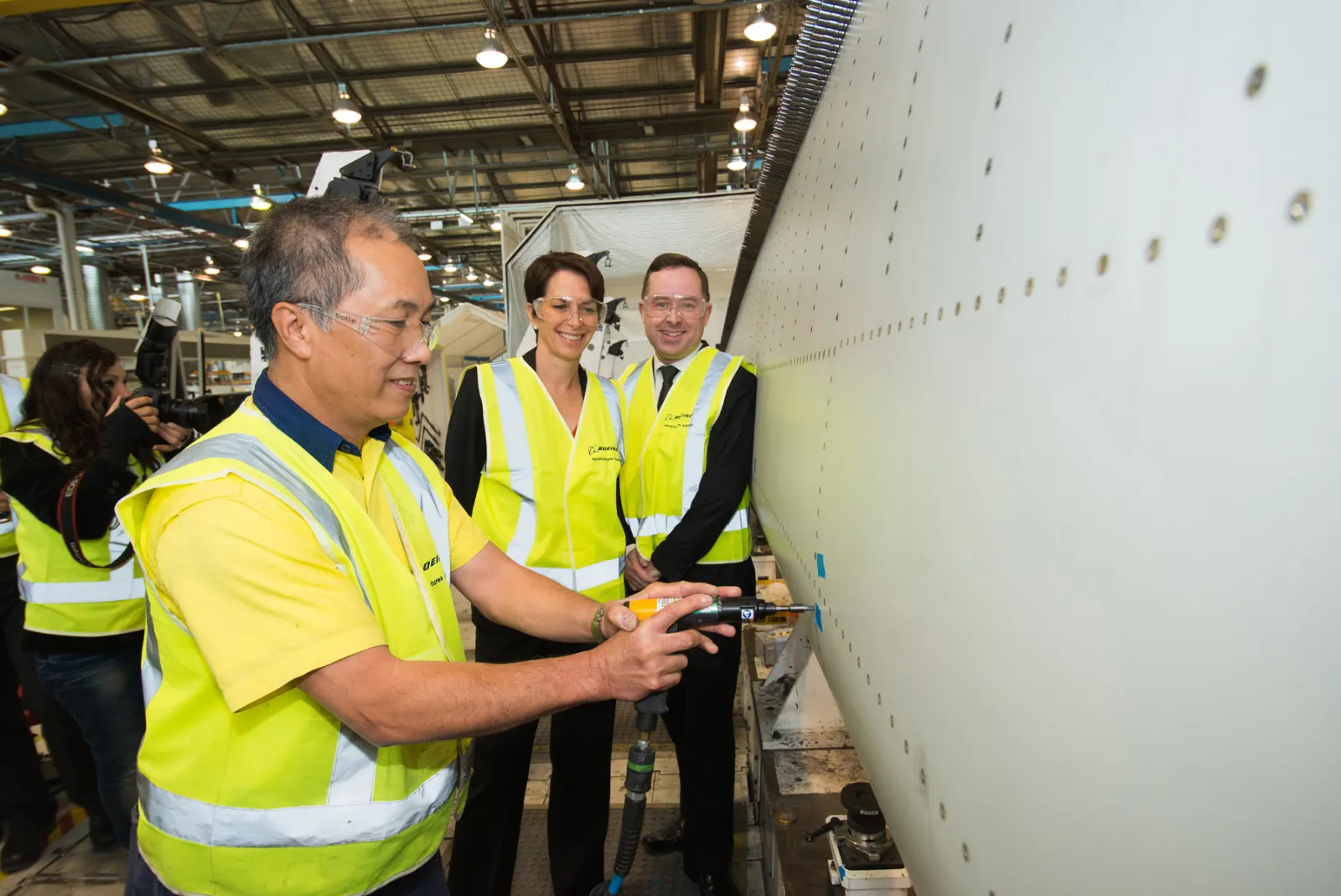
Invar 36 is the reference metal for carbon aerostructure tooling because its expansion matches the part through a 180 °C cycle. The penalties are mass, heat-up rate and lead time: at 8.11 g/cm³ and 10 W/m·°C [S1], an Invar tool is heavy and, with a sixteenth of aluminum's conductivity, slow to follow the autoclave air temperature [S5]. Special Metals sells dedicated CF36 filler metal for welding Invar composite tooling and recommends fully annealed material for service over a wide temperature range, with an additional stabilizing heat treatment where maximum dimensional stability is required [S1]. CompositesWorld reported in 2019 that Invar tooling takes 9 to 12 months to machine [S20]; Ascent Aerospace's hybrid Invar-composite tool was reported in 2018 as 50% lighter with a lead time at least 20% shorter than an all-Invar layup mold [S21]. Treat both as reported industry figures, not quotes.
Steel is the default for high-pressure, high-wear closed tools: compression molding of SMC and BMC, prepreg compression molding and RTM. Uddeholm's Impax Supreme, a P20-modified prehardened mold steel delivered at about 310 HB, offers 28 W/m·°C conductivity at 200 °C and can be nitrided for wear resistance [S6]. Hexcel's fast-cure HexPly M77HF, for example, cures in 3 minutes at 149 °C in compression or bladder molding, against a standard autoclave cure of 10 minutes at 121 °C under at least 85 psig [S19]; cycles that short only pay off in a steel or aluminum press tool. Chinese mold shops buy their steel against GB/T 35840, the four-part national standard for plastic mold steels covering non-alloy steel, prehardened bar, corrosion-resistant steel and prehardened plate [S28].
Aluminum is the light, fast and cheap metal. Alumec 89 weighs about a third as much as steel and conducts 165 W/m·°C; Uddeholm positions it for prototype tools and short to medium runs in blow molding, vacuum forming, foam and RIM molding [S5]. For composite work aluminum suits RTM, resin infusion caul plates, low-temperature prepregs and parts short enough for the expansion to be designed out. Electroformed and vapor-deposited nickel shells are offered for large, finely finished lay-up surfaces, but we found no public datasheet with the deposit's CTE or conductivity; a buyer should treat those values as test results to be supplied with the quote, not as known quantities.
↔ Scroll horizontally to see the full chart and data table.
Source: Uddeholm, Toyo Tanso and Special Metals datasheets [S1][S5][S6][S7]. Measurement temperatures differ as labeled. Composite tooling prepreg datasheets cited here give no conductivity value.
View the chart data and evidence
| Series | Category | Value | Unit | Evidence / value basis | Reported range | Point note |
|---|---|---|---|---|---|---|
| — | Aluminum mold plate (room temperature) | 165 | W/m·K | Company data | — | — |
| — | Isostatic graphite IG-11 | 120 | W/m·K | Company data | — | — |
| — | P20-type mold steel (200 °C) | 28 | W/m·K | Company data | — | — |
| — | Invar 36 (20 °C) | 10 | W/m·K | Company data | — | — |
5. Carbon fiber composite tools: epoxy and BMI tooling prepregs
A composite tool is a laminate made on a master. The usual chain is a tooling-board master machined to the part surface plus shrink allowance, a tool laminate of tooling prepreg laid on it and cured at low temperature so the master survives, and a freestanding post-cure on a backing structure that raises the glass transition above the production cure temperature. Toray's HX56 starts curing at 40 °C: 18 hours at 40 °C, 8.5 hours at 50 °C or 6 hours at 55 °C, with 65 °C as the ceiling during initial cure. Its post-cure then steps at 1 °C per minute through dwells at 60, 90, 120, 150 and 170 °C to a 6-hour hold at 190 °C [S2]. Adding those steps gives roughly 23 hours of oven time from bagged laminate to a tool rated for 180 °C (GetFRP estimate from the datasheet schedule, excluding lay-up and machining).
Toray's tooling range runs from HX56 (initial cure from 40 °C, 60 hours out life) to HX42 and HX40 (initial cure from 50 °C, Tg onset 219 and 203 °C, out life five and eight days) [S3]. The prepregs come in 205 g/m² surface plies at 46% resin and 650 and 990 g/m² bulk plies at 35% resin [S2]; the surface ply sets the finish and the bulk plies build stiffness quickly. Toray's own answer to the cycle-life question is that a standard composite tool typically lasts more than 250 cycles [S3]. HX56 must be stored at −18 °C, has a six-month storage life and loses 12 hours of out life when supplied pre-cut [S2], so the toolmaker's cold chain matters as much as the part maker's.
Carbon/BMI tooling compounds move the limit up. HexTool M61 is a quasi-isotropic mat of random BMI prepreg strips, 2,000 or 4,000 g/m² per ply, which is laid up, autoclave-cured from a minimum initial cure temperature of 190 °C, post-cured to a dry Tg of 275 °C and then CNC-machined to tolerance [S4]. Hexcel states a maximum use temperature of 218 °C, a CTE of 4.0 µm/m·°C matched to carbon/epoxy, vacuum integrity after machining and after more than 500 part cure cycles [S4]. Because it is machined after cure, its surface accuracy depends on the CNC program rather than on a master, which is the advantage Hexcel claims for complex, tight-tolerance tools [S4].
↔ Scroll horizontally to see the full diagram.
6. Which tool fits which process: autoclave, out-of-autoclave, infusion, RTM and SMC
Process conditions decide the shortlist before price does. An autoclave cure at 7 bar and 180 °C, as for HexPly 8552 [S18], needs a tool that is stiff under pressure, matched in CTE and vacuum-tight at temperature, which points to Invar or a post-cured carbon tool. An out-of-autoclave, vacuum-bag-only prepreg such as Toray 2510 cures at 121 to 132 °C in an oven [S17] and Syensqo's CYCOM 5320-1 qualification panels cure in two steps to 177 °C under vacuum alone [S16]; with no autoclave pressure to close porosity, every leak in the tool shows up as voids, so vacuum integrity becomes the first acceptance criterion.
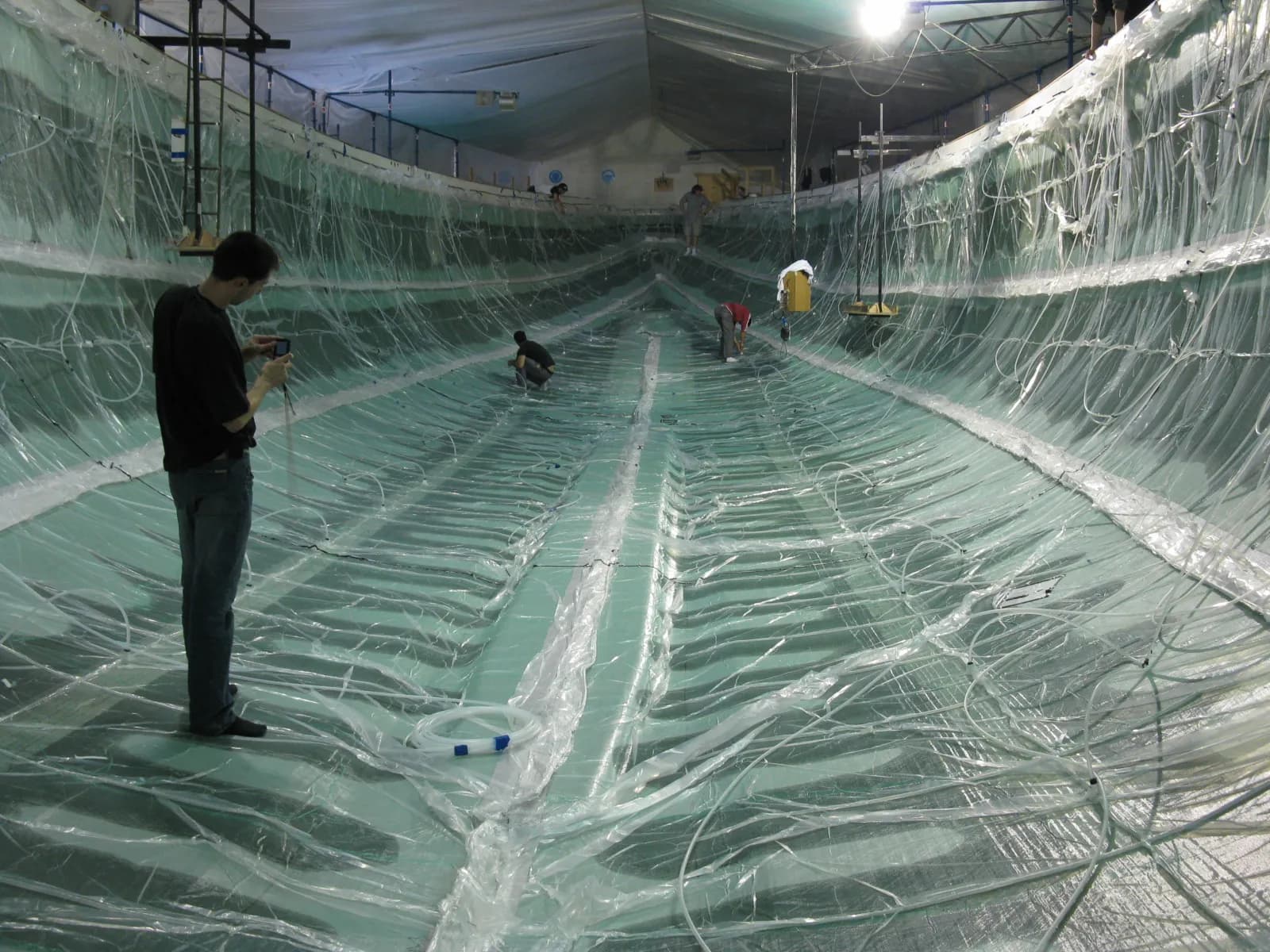
Room-temperature infusion of large glass parts, from boat hulls to wind blades, runs on glass laminate molds built with tooling gelcoats and low-shrink vinyl ester or epoxy, typically with embedded heating for the post-cure [S12]. ORNL notes that conventional blade molds carry heating wire throughout the structure [S22]. RTM and compression molding reverse the logic: cavity pressure and wear dominate, cycle times fall to minutes, and the tool is a matched steel or aluminum pair whose expansion is designed into the cavity.
| Process | Example cure conditions | Preferred tool materials | Watch-outs |
|---|---|---|---|
| Autoclave, 180 °C epoxy prepreg | HexPly 8552: 7 bar, dwell 110 °C for 60 min, hold 180 °C for 120 min [S18] | Invar 36; carbon/BMI (M61); carbon/epoxy tooling prepreg post-cured for 180 °C [S1][S2][S4] | Aluminum or steel on long carbon parts; board tools beyond their HDT |
| Out-of-autoclave, vacuum bag only | Toray 2510: 121–132 °C oven [S17]; CYCOM 5320-1: 121 °C then 177 °C, two hours each [S16] | Carbon/epoxy tools, Invar; joints sealed with O-rings [S14] | Porous faces and leaking penetrations cause voids that no pressure will close |
| Low-temperature prepreg, prototypes | Initial cures of 40–65 °C on board masters [S2] | Epoxy tooling board for direct molds, short series [S8][S9] | Board CTE of 35–45 µm/m·K; sealing and adhesive joints |
| Vacuum infusion (hulls, blades) | Room temperature, heated post-cure in the mold | Glass/epoxy or glass/vinyl ester laminate molds, heated [S12][S22] | Resin HDT (116 °C for a typical vinyl ester tooling resin) caps post-cure |
| RTM and HP-RTM | Closed matched tool, internal pressure | P20-type steel; aluminum for prototypes and short runs [S5][S6] | Steel heats slowly; aluminum wears and expands |
| Compression molding, SMC, BMC, PCM | HexPly M77HF: 3 min at 149 °C, press cure [S19] | Prehardened or nitrided steel [S6][S28] | Edge wear, shear edges and heating-channel layout set tool life |
Source: Cure conditions from the cited prepreg and resin datasheets; tool recommendations are GetFRP engineering guidance drawing on those sources.
7. China's composite mold-making base: blade molds lead, aerospace tooling is captive
China's most visible composite tooling industry builds wind blade molds, and its listed leader publishes the numbers. Shandong Shuangyi Technology reported non-metallic mold revenue of RMB 438.49 million in 2024, up 69.53% as blade makers changed platforms, then RMB 329.29 million in 2025, down 24.9% because molds for 2025 blade production were delivered early [S23][S25]. It sold 74,115.86 m² of mold surface in 2025 against 93,519.5 m² in 2024 [S23], which implies revenue of about RMB 4,440 per m² in 2025 and RMB 4,690 per m² in 2024 (GetFRP estimate: revenue divided by area sold; mixes blade and non-blade molds and includes installation). The 2024 board report already noted that blade-mold unit prices fell as competition among blade makers intensified [S25].
The same filings show where this base is heading. Shuangyi describes molds longer than 130 m, booked molds for a 147 m blade in 2025, and lists exports of blade molds to LM, Doosan, Adani and Korean customers [S23][S24][S25]. Its first-half 2026 mold revenue was RMB 212.97 million, up 1.73%, at a 24.69% gross margin, with domestic platform changes slowing and overseas orders filling the gap [S24]. Raw materials were 82.13% of its 2025 mold cost of sales [S23], so glass fabric, epoxy and steel prices move mold quotes more than labor does.
Aerospace tooling sits mostly inside the state aviation groups. AVIC Hi-tech's composite mold subsidiary, Nantong Wantong Aviation, is building a design, manufacturing and service capability for composite molds and is verifying wire-arc additive manufacturing for tools, but reported revenue of only RMB 2.53 million in 2025 [S26]. For export buyers, GetFRP's directory lists independent shops that cover parts of the chain: compression tools and temperature-control systems in Jiaxing, pultrusion dies in Yuyao, tooling prepreg and film adhesive in Chengdu, tooling resin systems in Shanghai and prepreg compression-molding cells in Shanghai (profiles linked below).
Where China leads is scale and cost on large glass laminate molds; where buyers should verify hardest is the evidence pack for hot-cure carbon tooling: post-cure records, thermal surveys and dimensional reports referenced to a stated temperature. No Chinese filing we reviewed discloses Invar tooling volumes.
| Period | Mold revenue | Mold area sold | Implied revenue per m² | Gross margin | Notes |
|---|---|---|---|---|---|
| 2024 | RMB 438.49 million (+69.53%) | 93,519.5 m² | ≈RMB 4,690 [estimate] | not restated here | Platform changeover boom; unit prices fell [S25] |
| 2025 | RMB 329.29 million (−24.9%) | 74,115.86 m² | ≈RMB 4,440 [estimate] | 27.18% (+5.12 points) | 147 m blade molds booked; overseas growth [S23] |
| H1 2026 | RMB 212.97 million (+1.73%) | not disclosed | — | 24.69% | LM and Doosan orders; domestic changeovers slower [S24] |
Source: Shuangyi 2024 board report, 2025 annual report and 2026 interim report [S23][S24][S25]. Implied price = revenue ÷ area sold; GetFRP estimate.
8. How much do composite molds cost and how long do they take?
Public tool prices are rare, and the few that exist are ranges. ORNL put conventional wind blade tooling at hundreds of thousands to a million US dollars per blade in 2017, with a tooling process taking months and sometimes up to a year [S22]. Shuangyi's filings imply RMB 4,440 to 4,690 of revenue per square meter of mold surface in 2024 and 2025 (GetFRP estimate from [S23][S25]); a buyer can use that as a sanity check on a quote for a large glass laminate mold, scaled by surface area, heating system and handling equipment. Aerospace Invar tool prices are negotiated program by program and not disclosed.
Lead time is driven by route. A composite tool from an existing master needs about a day of oven time (GetFRP estimate from the HX56 schedule [S2]) plus lay-up, backing structure and machining. A machined BMI tool adds an autoclave cure from 190 °C and CNC time [S4]. Invar adds plate procurement, forming, welding, stress relief and machining, reported at 9 to 12 months [S20]. Hybrid designs that use a thin metal face on a lighter structure are a response to that delay [S21].
A price check you can run
Ask every bidder for tool face area, laminate schedule, heating zones and handling equipment as separate lines. A large glass laminate mold quoted far from the RMB 4,440–4,690 per m² implied by the listed leader's filings is not necessarily wrong, but the difference should be explained by scope: heating, flipping hydraulics, installation, carbon content or tolerance class (GetFRP estimate basis [S23][S25]).
| Driver | Evidence | What to ask for in the quote |
|---|---|---|
| Material share | Raw materials were 82.13% of Shuangyi's 2025 mold cost of sales [S23] | Bill of materials by tool element: face laminate, core, backing frame, heating |
| Tool size | Blade molds are sold and reported by surface area in m² [S23] | Price per m² of tool face and separately for handling and flipping systems |
| Route and lead time | Invar 9–12 months machining [S20]; hybrid at least 20% shorter [S21]; blade tooling months to a year [S22] | Gantt chart: master, laminate, post-cure, machining, acceptance |
| Cycle life | More than 250 cycles typical for a composite tool [S3]; more than 500 for M61 BMI [S4] | Guaranteed cycles before resurfacing, and the repair method |
| Thermal system | Blade molds carry embedded heating [S22]; cored tools lag in temperature [S14] | Heating zones, controller, thermal survey report |
Source: Company filings, manufacturer datasheets and reported industry figures as cited; GetFRP sourcing guidance.
9. Tool acceptance: vacuum leak rate, surface, laser tracker and thermal survey
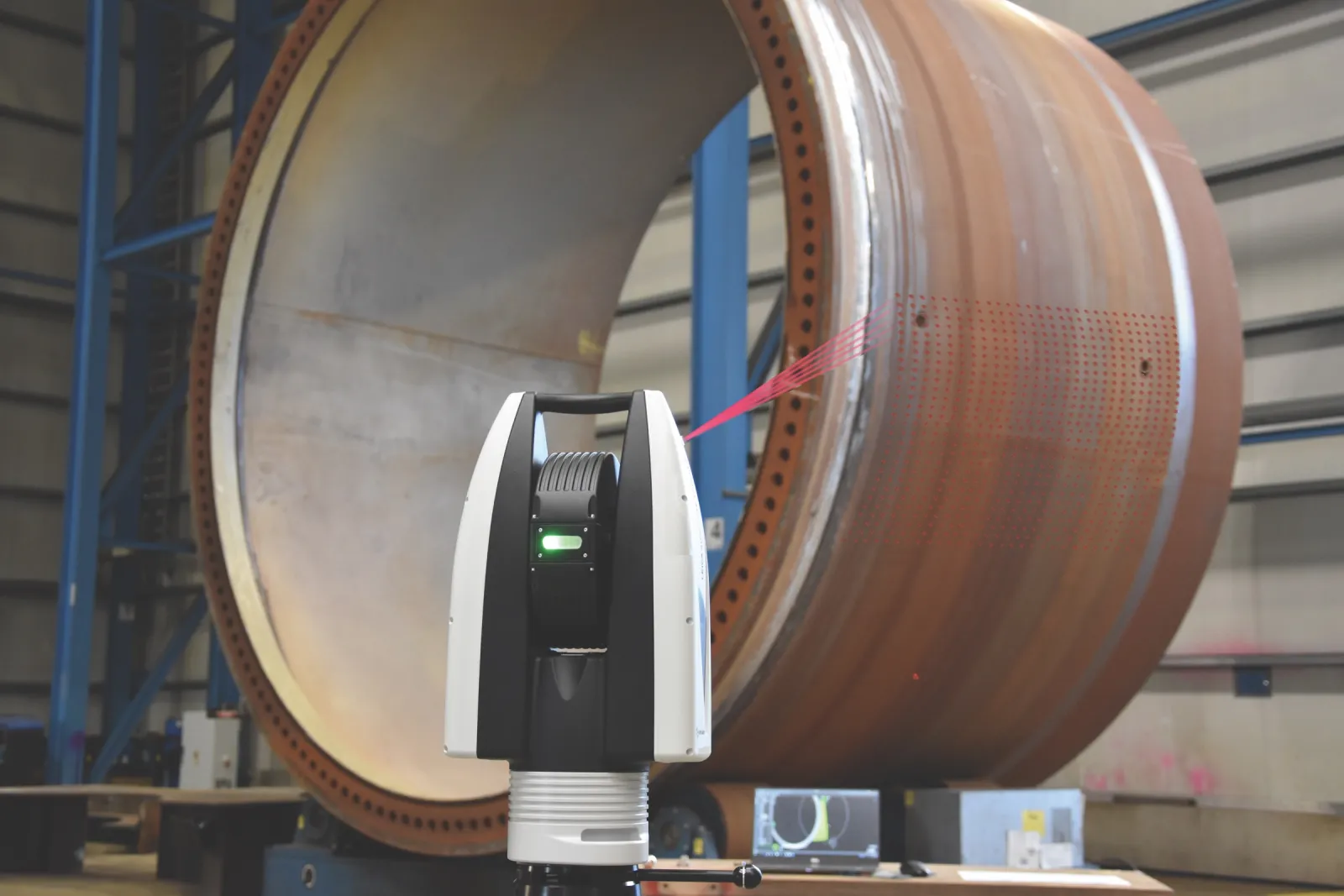
Acceptance criteria should be numbers in the purchase order, and public documents give usable ones. For vacuum integrity Gurit asks that the mold be tested through the intended cure cycle, at no less than 90% vacuum (about 900 mbar) and with a target drop of less than 5% over 10 minutes [S14]. Part-level bag checks set the context: Toray's 2510 cure instructions limit the leak rate to less than 2 inches of mercury (7 kPa) over 5 minutes [S17], and the NCAMP process specification for CYCOM 5320-1 panels allows no more than 1 inch of mercury in 5 minutes [S16]. A tool that consumes most of that budget on its own leaves nothing for the bag.
A thermal survey maps the tool face with thermocouples through a full cycle to find hot spots, cold spots and lag; Gurit asks for that map at tool validation [S14]. It matters because cure cycles are controlled on part thermocouples: HexPly 8552's cycle runs on the leading thermocouple [S18], while the 5320-1 specification starts its holds when the lagging thermocouple reaches temperature [S16]. Dimensional acceptance uses a laser tracker or CMM against the CAD surface. A Leica AT960-class tracker has a maximum permissible error of ±15 µm + 6 µm/m in angle and ±10 µm in distance, or 0.106 mm over a 10 m and 0.361 mm over a 40 m scale bar [S15]. A 1 °C change moves a 10 m steel tool by about 0.127 mm and a 10 m Invar tool by about 0.015 mm (GetFRP estimate: 10,000 mm × 12.7 or 1.5 µm/m·°C [S1][S6]), so a dimensional report without a recorded tool temperature is incomplete.
| Test | What to specify | Reference values from public documents |
|---|---|---|
| Vacuum integrity | Bagged tool held through the full cure cycle at temperature, logged | At least 90% vacuum; drop under 5% in 10 min (Gurit) [S14]; part bags: ≤1 inHg in 5 min (NCAMP 5320-1) [S16], <2 inHg in 5 min (Toray 2510) [S17] |
| Thermal survey | Thermocouple map of the tool face through a production cycle | Map required at tool validation [S14]; holds controlled on leading or lagging thermocouples [S16][S18] |
| Dimensional inspection | Laser tracker or CMM against CAD, at a recorded tool temperature | AT960 MPE ±15 µm + 6 µm/m angle; 0.106 mm over 10 m [S15] |
| Surface | Non-porous, sealed face with a release system rated for the cure | Surface must be non-porous; vacuum integrity checked before parts are made [S14] |
| Composite tool cure state | DMA Tg of a witness coupon above the production cure temperature | HX56 Tg onset 185 °C after 190 °C post-cure [S2]; M61 Tg 275 °C [S4] |
| Metal tool stability | Stress relief before final machining; heat treatment record | Annealing and stabilizing heat treatments for Invar 36 [S1] |
Source: Manufacturer guides, an NCAMP process specification and a metrology datasheet as cited; values are references for negotiation, not universal standards.
10. RFQ checklist for composite tooling from China
A tooling RFQ that names a material family but not the cycle, tolerance and evidence will get quotes that cannot be compared. The checklist below turns the sections above into requirements a supplier can price and an inspector can verify.
- 1. Process window: state cure temperature, pressure, ramp rates and dwell, for example 7 bar, 110 °C dwell and 180 °C hold for a 8552-class prepreg [S18], and the number of production cycles required.
- 2. Material and CTE: name the tool material and require a CTE value with its temperature range, for example Invar 36 at 2.6 µm/m·°C over 20–200 °C [S1] or a quasi-isotropic carbon tool at 3.2 µm/m·°C [S2].
- 3. Composite tool cure: require the post-cure schedule and a DMA Tg coupon from the tool laminate, with Tg above the production cure temperature [S2][S4].
- 4. Vacuum integrity: at least 90% vacuum with under 5% drop in 10 minutes, tested through a full thermal cycle, with the log delivered [S14].
- 5. Thermal survey: thermocouple map of the face through one production cycle, with maximum lag and spread reported.
- 6. Dimensions: laser tracker or CMM report against CAD with tracker model, MPE and recorded tool temperature; an AT960-class instrument carries 0.106 mm MPE over 10 m [S15].
- 7. Surface: face finish, sealing system and release system rated for the cure temperature; witness panel delivered.
- 8. Metal tools: plate certificates, weld procedure and filler (CF36-type for Invar [S1]), stress-relief record before final machining; mold steel to GB/T 35840 where specified [S28].
- 9. Board and master: board grade and datasheet, with the master's HDT or use temperature above every cure it will see [S8][S9][S10].
- 10. Cycle life and repair: guaranteed cycles before resurfacing, repair method, and re-certification after any repair.
- 11. Commercials: price by element (face, structure, heating, handling), lead-time Gantt, packing for sea freight and installation support; for blade molds compare against the per-m² benchmark in Section 8.
Frequently asked questions
What is the best mold material for carbon fiber autoclave parts?
For 180 °C autoclave carbon parts, Invar 36 or a post-cured carbon composite tool. Invar 36 expands 1.5–2.6 µm/m·°C between 20 and 200 °C; a quasi-isotropic carbon/epoxy tool about 3.2 and a carbon/BMI tool about 4.0. Aluminum at 23 µm/m·°C and P20 steel at 12.7 µm/m·°C grow several millimeters more than a carbon part over a 2 m length, which distorts it on cool-down.
What is the CTE of Invar 36 compared with carbon fiber composite tooling?
Invar 36's mean CTE is 1.5 µm/m·°C from 20 to 100 °C, 2.0 to 150 °C and 2.6 to 200 °C, rising to 5.5 by 300 °C because of an inflection near 220 °C. Toray's HX56 carbon/epoxy tool in a 1-8-1 quasi-isotropic stack is 3.2 µm/m·°C; Hexcel's HexTool M61 carbon/BMI is 4.0 µm/m·°C in-plane.
Can I use aluminum molds for carbon fiber parts?
Yes for low-temperature cures, RTM, short parts and prototypes, where expansion can be compensated in the cavity. For long carbon parts cured at 180 °C it is a poor match: a 2 m aluminum tool grows at least 7.4 mm from 20 to 180 °C against about 1 mm for a carbon tool. Aluminum's advantage is conductivity of 165 W/m·°C against 10 for Invar, so it heats and cools fast.
How many cycles does a carbon fiber composite mold last?
Toray states that a standard composite tool typically lasts more than 250 cycles. Hexcel rates its machined carbon/BMI HexTool M61 for more than 500 cure cycles at 180 °C with vacuum integrity. Metal tools last longer and can be weld-repaired, but cost more and take longer: Invar tools were reported at 9 to 12 months of machining.
What temperature can composite tooling board withstand?
It depends on grade. RAMPF's WB-0700 epoxy board is rated to 140 °C (HDT 130–140 °C), Sika's M976 EP has an HDT of 120 °C, Huntsman's RenShape 5065 is rated for use to 204 °C, and polyurethane RenShape BM 5460 has an HDT of only 75–80 °C. Board CTEs of 35–55 µm/m·K make boards suitable for masters and short low-temperature runs, not production carbon tools.
What vacuum leak rate is acceptable for a composite mold?
A practical reference is Gurit's tool validation target: at least 90% vacuum (about 900 mbar) with a drop of less than 5% over 10 minutes, tested through the full cure cycle. Part-level bag checks are stricter in absolute terms: no more than 1 inHg in 5 minutes for NCAMP CYCOM 5320-1 panels and under 2 inHg (7 kPa) in 5 minutes for Toray 2510.
How much does a wind turbine blade mold cost?
ORNL put conventional blade tooling at hundreds of thousands to about one million US dollars per blade in 2017, with months to a year of lead time. In China, Shuangyi Technology's filings imply about RMB 4,440 of revenue per square meter of mold surface in 2025 and RMB 4,690 in 2024 (GetFRP estimate from revenue and area sold).
Can Chinese mold makers supply export-grade composite tooling?
For large glass laminate molds, yes: Shuangyi sold 74,116 m² of mold surface in 2025, describes molds over 130 m and exports blade molds to LM, Doosan and Adani. For hot-cure carbon tooling, require the evidence pack: post-cure record and Tg coupon, vacuum test through a cure cycle, thermal survey and a laser tracker report at a recorded temperature.
Sources and scope
Figures were cross-checked against primary documents where available; secondary citations are marked in each scope note. Company figures are reported as disclosed by the companies themselves. This note is an independent market assessment and not investment advice.
- [S1]Special Metals, NILO and NILOMAG alloys technical bulletin (NILO alloy 36)
Invar 36 typical mean CTE table from −200 to 500 °C (1.5 at 20–100 °C, 2.6 at 20–200 °C), density 8.11 g/cm³, conductivity 10.0 W/m·°C, inflection point 220 °C, CF36 filler for composite tooling, heat treatments. Typical values, not specification.
- [S2]Toray Advanced Composites, AmberTool HX56 product data sheet v4.0 (25 January 2021)
Carbon tool CTE 3.2 × 10⁻⁶/°C for a 1-8-1 quasi-isotropic laminate; 180 °C end use after post-cure; initial cure 40–55 °C with times; post-cure schedule to 190 °C; Tg onset 185 °C; 6 months at −18 °C; 60 h out life; ply weights and resin contents.
- [S3]Toray Advanced Composites, composite tooling prepregs product page
HX56, HX42 and HX40 initial cure temperatures, Tg onset and out life; FAQ statement that a standard composite tool typically lasts more than 250 cycles.
- [S4]Hexcel, HexTool M61 quasi-isotropic high-temperature prepreg tooling compound data sheet
BMI tooling compound: 38% resin, 2,000/4,000 g/m² plies, specific gravity 1.55, 20-day work life, 12-month storage at −18 °C, Tg 275 °C, maximum use 218 °C, in-plane CTE 4.0 × 10⁻⁶/°C (ASTM E289), minimum initial cure 190 °C, more than 500 cycles claim.
- [S5]Uddeholm, Alumec 89 technical datasheet (2024)
Aluminum mold plate: density 2,830 kg/m³, CTE 23 × 10⁻⁶/°C (20–100 °C), conductivity 165 W/m·°C, about one third of steel weight, application areas and run lengths.
- [S6]Uddeholm, Impax Supreme technical datasheet (2024)
P20-modified prehardened mold steel at about 310 HB: density 7,800 kg/m³, CTE 12.7 × 10⁻⁶/°C from 20 to 200 °C, conductivity 28 W/m·°C at 200 °C, nitriding.
- [S7]Toyo Tanso, special graphite typical properties
Isostatic graphite IG-11: bulk density 1.77 Mg/m³, CTE 4.5 × 10⁻⁶/K measured at 350–450 °C, conductivity 120 W/m·K. Typical, not guaranteed; not a tooling-specific datasheet.
- [S8]RAMPF, RAKU TOOL WB-0700 epoxy board technical data sheet (rev. 03, 17 July 2025)
Density about 0.70 g/cm³ (ISO 1183), CTE 35–45 × 10⁻⁶/K (ISO 11359), HDT 130–140 °C (ISO 75), temperature resistant to 140 °C, prepreg lay-up tools.
- [S9]Sika, SikaBlock M976 EP epoxy tooling board product data sheet (v03.01, June 2025)
Density 0.73 kg/l, HDT 120 °C (ISO 75B), CTE 38 × 10⁻⁶/K (ISO 11359); masters for autoclave prepreg molds and direct molds for short series.
- [S10]Huntsman Advanced Materials, RenShape 5065 high-temperature epoxy board datasheet (January 2013, distributor-hosted)
Use to 204 °C, Tg 243 °C by DMA, density 0.79 g/cm³, CTE 34.7 × 10⁻⁶/°C (25–150 °C) and 36.5 (25–200 °C) by ASTM D3386. Manufacturer document hosted by a distributor; older edition.
- [S11]Huntsman Advanced Materials, RenShape BM 5460 polyurethane tooling board datasheet (March 2017, distributor-hosted)
Density 0.7 g/cm³, CTE 50–55 × 10⁻⁶/K (ISO 11359), HDT 75–80 °C (ISO 75); master models and patterns.
- [S12]AOC, MoldTru LPT-68000 vinyl ester tooling resin technical data sheet (May 2017, distributor-hosted)
Low-profile vinyl ester tooling resin: cast HDT 116 °C (ASTM D648), gel and exotherm data, three-month shelf life. Represents the resin, not a finished laminate mold.
- [S13]Airtech International, rubber tooling product range
Maximum use temperatures: silicone bagging rubbers 232–260 °C, Airpad non-silicone tooling rubber 204 °C.
- [S14]Gurit, epoxy prepreg processing guide (December 2025)
Tool CTE matching (carbon part on carbon tool), sealed joints, non-porous surface, tool validation at no less than 90% vacuum with under 5% drop over 10 minutes through the cure cycle, temperature mapping, thermal lag of cored tools.
- [S15]Hexagon Manufacturing Intelligence, Leica Absolute Tracker AT960 data sheet (ASME B89.4.19-2006), distributor copy
MPE ±15 µm + 6 µm/m angular, ±10 µm ADM distance; horizontal scale bar MPE 0.036 mm at 2 m to 0.700 mm at 80 m; air temperature variation excluded.
- [S16]NCAMP / NIAR, NPS 85321 Rev D process specification for CYCOM 5320-1 test panels (12 August 2025)
Vacuum-bag-only cure: leak check no more than 1 inHg in 5 minutes; pre-cure vacuum hold; 121 °C then 177 °C holds of 120 minutes started on the lagging thermocouple.
- [S17]Toray Composite Materials America, 2510 prepreg system data sheet
OOA prepreg cured at 121–132 °C in oven or autoclave; leak rate below 2 inHg (7 kPa) over 5 minutes; 28-day out life at 22 °C.
- [S18]Hexcel, HexPly 8552 product data sheet (EU, 2023 edition)
Autoclave cure: 7 bar, 1–3 °C/min to 110 °C for 60 min, then 180 °C for 120 min, cool 2–5 °C/min, vent at 60 °C or below; leading-thermocouple control.
- [S19]Hexcel, HexPly M77HF quick-cure epoxy prepreg data sheet
Cure in 3 minutes at 149 °C; compression, bladder or autoclave cure with 85 psi minimum in autoclave; used here as an example of press-cure tool demands.
- [S20]Gardiner, Cutting the cost and time of tooling for composites, CompositesWorld (2 July 2019)
Reported 9–12 months to machine Invar tooling and a vendor claim of 1–2 week tools; trade press, company claims not independently verified.
- [S21]Ascent Aerospace develops Invar-composite mold material, CompositesWorld (29 January 2018)
HyVarC hybrid tool reported 50% lighter with at least 20% shorter lead time than an all-Invar layup mold; company claim via trade press.
- [S22]Oak Ridge National Laboratory, Additive manufacturing of wind blade molds targets time, cost savings (24 May 2017)
Conventional blade tooling costs hundreds of thousands to a million dollars per blade and can take months, sometimes up to a year; molds carry embedded heating wire; 13 m printed mold demonstrator.
- [S23]Shandong Shuangyi Technology, 2025 annual report (SZSE 300690, 21 April 2026)
Non-metallic mold revenue RMB 329.29 million (−24.9%), 74,115.86 m² sold (93,519.5 m² in 2024), gross margin 27.18%, raw materials 82.13% of mold cost, 147 m blade mold order, molds over 130 m, overseas projects.
- [S24]Shandong Shuangyi Technology, 2026 interim report (25 August 2026)
H1 2026 non-metallic mold revenue RMB 212.97 million (+1.73%), gross margin 24.69%; LM and Doosan orders; slower domestic platform changeovers.
- [S25]Shandong Shuangyi Technology, 2024 board of directors' work report (19 April 2025)
2024 non-metallic mold revenue RMB 438 million (+69.53%); falling blade-mold unit prices; exports to Korean, Indian and LM customers; flipping system.
- [S26]AVIC Aviation High-Technology (AVIC Hi-tech), 2025 annual report (SSE 600862, 14 March 2026)
Nantong Wantong Aviation composite mold design-manufacturing-service build-out, wire-arc additive manufacturing verification, RFID for high-temperature molds; 2025 revenue RMB 2.53 million.
- [S27]Lawrence Berkeley National Laboratory, Elements of fabrication: lamination, bagging and tool design (CERN Indico, March 2017)
Qualitative comparison of tooling materials: monolithic graphite with good CTE match but low tool integrity for short runs; tooling board limited in temperature. Lecture material.
- [S28]SAMR national standards registry (openstd), GB/T 35840 plastic mold steel, Parts 1–4
GB/T 35840.1-2018 non-alloy steel, .2-2018 prehardened bar, .3-2018 corrosion-resistant steel, .4-2020 prehardened plate; status and implementation dates.
Image provenance and usage terms appear in each caption; see image credits. Submit a source correction.