1. What is the difference between SMC and BMC?
Both are ready-to-mold thermoset compounds built on the same chemistry: unsaturated polyester or vinyl ester resin, a low-profile or low-shrink thermoplastic additive, mineral filler, chopped glass, a peroxide initiator, a thickener and an internal mold release [S1]. The difference is how the glass gets in and how long it stays. On an SMC line, continuous rovings are chopped, generally to 25 mm and sometimes 50 mm, and dropped onto a film of resin paste; a second paste-coated film closes the sandwich and rollers knead it into a sheet normally 4 mm thick and 1,500 mm wide [S1]. BMC is mixed batchwise in a Z-blade kneader, with fibers of 6 to 12 mm and higher filler loadings than SMC [S1].
Glass content follows from that. A BYK technical review puts SMC glass at 20 to 60% by mass and BMC at 10 to 18% [S3]; Johns Manville describes typical SMC with fiber about 1 inch long at 20 to 50% of the compound [S5]. General-purpose exterior SMC sits at about 30%, structural SMC at 50 to 60%, and an injection BMC at about 20% in the Alliance property tables [S1]. Huayuan, a Ningbo compounder, describes its SMC fiber as usually 1 inch and its BMC fiber as 3, 6 or 9 mm [S34], so ask for the actual chop length rather than assuming the textbook range.
For a buyer the practical rule is short. If the part is large, mostly flat or shell-like, needs stiffness, impact strength or a paintable Class A surface, start with SMC and compression molding. If it is small, has thin walls, ribs, bosses, metal inserts or tight electrical requirements, start with BMC, and consider injection molding when volumes justify it. The rest of this report puts numbers behind each of those criteria.
↔ Scroll horizontally to see the full diagram.
| Attribute | SMC | BMC | Source |
|---|---|---|---|
| Supply form | Sheet between carrier films, normally 4 mm thick, 1,500 mm wide, on 350–1,500 kg rolls | Dough or extruded log in barrier film; pre-weighed slugs for injection | [S1] |
| Glass fiber length | Generally 25 mm; 25–50 mm | 6–12 mm | [S1] |
| Glass content, mass | 20–60%; about 30% general purpose, 50–60% structural | 10–18% (BYK); about 20% injection grade (Alliance) | [S3] [S1] |
| Molding route | Compression in matched steel dies, often with vacuum assist | Compression, transfer or injection | [S1] [S8] |
| Tool temperature and pressure | 140–160 °C, about 100 bar projected area | About 150 °C, 35–65 bar (compression); 135–155 °C, 2–8 MPa injection pressure | [S1] [S8] [S12] |
| Density | 1.9 g/cm³ standard; 1.24–1.4 low density | 1.7–2.0 g/cm³ | [S1] [S13] [S15] |
| Typical tensile / flexural strength | 80 / 180 MPa (30% glass); 180 / 270 MPa (50% glass) | 25–50 / 90–130 MPa | [S1] [S14] [S8] |
| Typical parts | Truck hoods, tailgates, battery covers, enclosures, bathroom and water-tank panels | Breaker housings, insulators, headlamp reflectors, motor end bells, iron and coffee-machine parts | [S1] [S2] [S9] |
| China product standard | GB/T 15568-2024 (general purpose); GB/T 23641-2018 (electrical) | GB/T 23641-2018 (electrical) | [S26] [S27] |
| ISO specification | ISO 8605:2024 | ISO 8606:2025 (BMC and DMC) | [S28] [S29] |
Source: Named compounder datasheets, the European Alliance for SMC/BMC design manual and standards catalogues. Typical values, not specification limits.
2. SMC and BMC formulation: resin, filler, glass and additives
A general-purpose SMC is more filler than resin. A published reference formulation runs 25% polyester resin with styrene monomer, 4% low-profile additive as a polyvinyl acetate solution, 40% calcium carbonate, dolomite or aluminum trihydrate filler, 1% magnesium oxide thickener, 0.7% zinc stearate release, 0.3% initiator and inhibitor, and 29% glass [S4]. The thickener is dosed at 0.5 to 3% of resin plus additive [S4]; it is what turns a pourable paste into a handleable, tack-free sheet by raising viscosity about a thousand-fold during maturation [S1]. Less than 30% of a typical SMC or BMC recipe is derived from crude oil [S1].
Each ingredient maps to a specification line. Vinyl ester replaces polyester where sustained heat and chemical resistance are needed [S1]. The low-profile additive controls shrinkage: low-profile Class A systems shrink between −0.05% and 0%, low-shrink systems 0 to 0.1%, and a general-purpose compound about 0.2% [S1]. Aluminum trihydrate in place of calcium carbonate is the usual route to flame retardancy without halogens, and hollow glass microspheres in place of part of the carbonate produce low-density grades [S17]. Structural SMC can drop the filler entirely: a peer-reviewed vinyl ester SMC with no filler, MgO thickener and Johns Manville Multistar 272 roving reached 64 to 150 MPa tensile strength as fiber volume rose from 17 to 31% [S7].
The glass itself is a dedicated product. SMC roving is an assembled roving of about 2,400 or 4,800 tex [S5]; Jushi sells its 440 general-purpose SMC roving at 2,400, 4,400 and 4,800 tex with 14 to 16 µm filaments, compatible with polyester and vinyl ester, and a separate 456 grade for Class A [S6]. Chinese input prices set the floor for compound pricing: FRP-grade unsaturated polyester from one listed producer averaged RMB 7,121–7,346/t excluding VAT across the first quarters of 2024 and 2025 [S32], and 2400 tex direct roving traded at RMB 3,500–3,800/t in late April 2025 [S33]. Neither is an SMC price; compound quotations depend on filler, glass content, additives and packaging.
↔ Scroll horizontally to see the full chart and data table.
- Mineral filler (CaCO3, dolomite, ATH)40%
- Glass fiber29%
- Polyester resin and styrene25%
- Low-profile additive (PVAc solution)4%
- MgO thickener1%
- Zinc stearate release0.7%
- Initiator and inhibitor0.3%
Source: Brucite+ MagPro technical brochure, Table 1 [S4]. A thickener supplier's reference recipe, not a commercial grade. BMC raises filler and lowers glass; structural SMC removes filler and raises glass to 50–60% [S1] [S3].
View the chart data and evidence
| Series | Category | Value | Unit | Evidence / value basis | Reported range | Point note |
|---|---|---|---|---|---|---|
| — | Mineral filler (CaCO3, dolomite, ATH) | 40 | % | Company data | — | — |
| — | Glass fiber | 29 | % | Company data | — | — |
| — | Polyester resin and styrene | 25 | % | Company data | — | — |
| — | Low-profile additive (PVAc solution) | 4 | % | Company data | — | — |
| — | MgO thickener | 1 | % | Company data | — | — |
| — | Zinc stearate release | 0.7 | % | Company data | — | — |
| — | Initiator and inhibitor | 0.3 | % | Company data | — | — |
| Ingredient | Typical level | Function | What to put in the RFQ |
|---|---|---|---|
| Unsaturated polyester or vinyl ester resin | 25% (general SMC) | Matrix; VE for heat and chemical resistance | Resin family; VE if continuous heat or chemical exposure |
| Low-profile or low-shrink additive | 4% | Compensates cure shrinkage; Class A needs LP | Shrinkage target: −0.05–0% (LP Class A), 0–0.1% (LS), about 0.2% (general) |
| Mineral filler | 40% (SMC); higher in BMC | Cost, stiffness, surface; ATH adds flame retardancy | Halogen-free FR required or not; density target |
| MgO thickener | 0.5–3% of resin plus additive | Raises viscosity about 1,000-fold during maturation | Maturation time and molding-viscosity window |
| Glass roving, chopped | 29% here; 20–60% SMC, 10–18% BMC | Strength, stiffness, impact | Glass content by burn-off; chop length; roving grade |
| Initiator, inhibitor, release | About 1% together | Cure speed, shelf life, demolding | Shelf life and storage temperature on the CoA |
3. SMC and BMC molding parameters: temperature, pressure and cycle time
Compression molding SMC is a hot-tool, high-pressure process. The Alliance design manual gives tool temperatures of usually 140 to 160 °C, a molding pressure of around 100 bar on the projected area, and a typical cycle below two minutes [S1]. Its appendix tables run 145 to 160 °C and 40 to 100 bar in the cavity for standard SMC, 155 to 160 °C and 100 to 160 bar for structural and carbon grades, and recommend 30 to 45 seconds of cure per millimeter of wall thickness, with outer panels designed at 2.0 to 3.0 mm and inner panels at 2.0 to 3.5 mm [S1]. Class A parts are molded with vacuum assist, which evacuates the cavity before final closure [S1].
BMC runs cooler on pressure. LyondellBasell gives its BMC grades as compression, injection or transfer molded at typically 150 °C and 35 to 65 bar [S8] [S9]; Menzolit lists its injection BMC at a 135 to 155 °C mold temperature and 2 to 8 MPa injection pressure [S12]. Small injection parts cycle well below 60 seconds, from pre-weighed slugs fed to a reciprocating-screw machine whose screw also acts as the ram [S1].
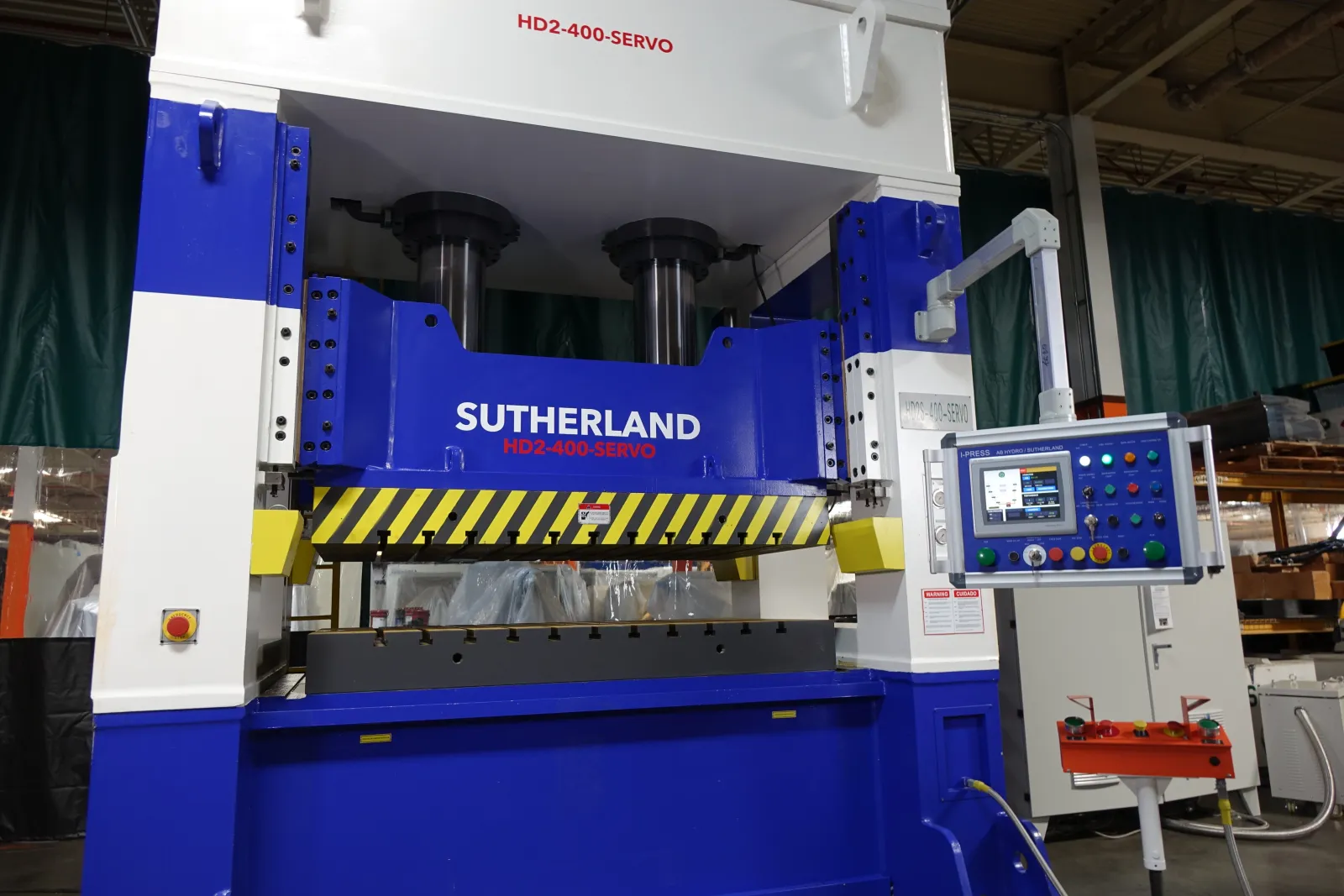
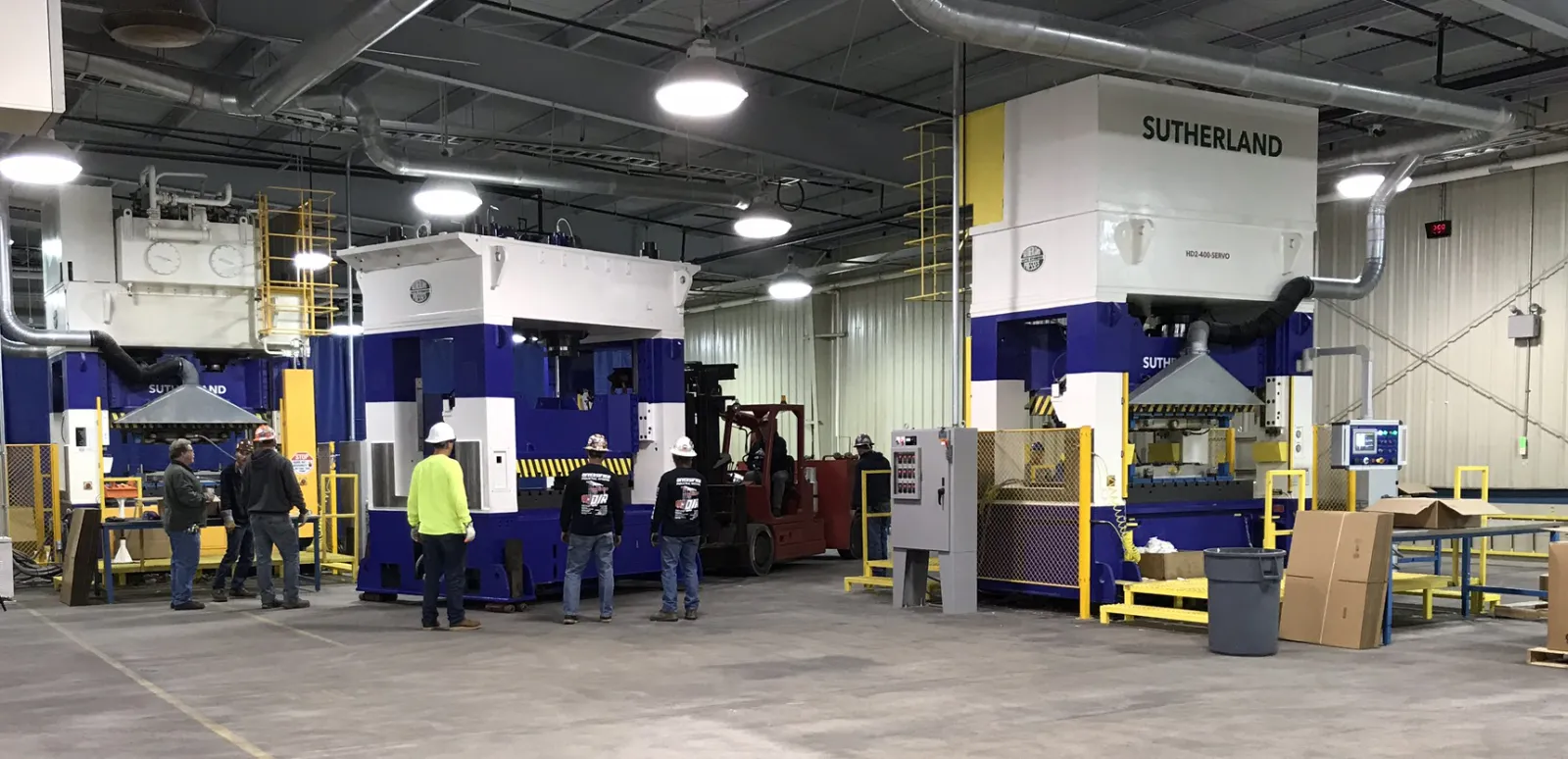
Press size follows directly from pressure and projected area. At 100 bar, each square meter of projected part area needs 10 MN, or about 1,020 tonnes-force, before any margin for flash land and off-center loading [estimate: 10 MPa × 1 m² = 10 MN; 10 MN ÷ 9.81 kN/t]. A 1.5 m² truck panel therefore needs a press of roughly 1,500 tonnes or more. Small enclosures run on far smaller machines, such as the two custom 400-ton four-post presses one US enclosure molder installed for SMC [S35]. That is why Chinese SMC molders publish press fleets from 300 to 4,000 tonnes [S25] and why press tonnage, platen size and daylight are the first capacity questions to ask, ahead of compounding capacity.
Material condition matters as much as machine settings. SMC needs maturation, normally 48 hours at 30 °C and two to five days to reach molding viscosity; it then has a shelf life of several weeks to several months if stored no warmer than 20 °C, and Class A grades have an optimum molding window of around two weeks after manufacture [S1]. A supplier who cannot show the compound's production date, storage temperature and viscosity check on each lot is guessing at the process window.
↔ Scroll horizontally to see the full diagram.
| Material and source | Mold temperature | Pressure | Cycle or cure | Route |
|---|---|---|---|---|
| Standard SMC, Alliance appendix | 145–160 °C | 40–100 bar cavity | 30 s per mm | Compression |
| Structural, carbon and 60% glass SMC, Alliance | 155–160 °C | 100–160 bar | Grade-specific | Compression |
| Class A SMC, Menzolit SMC 0410 | 145–155 °C | 8–10 MPa | Grade-specific | Compression, vacuum assist |
| Class A SMC, LyondellBasell Premi-Glas 7000 | About 150 °C | Not stated on TDS | Grade-specific | Matched metal dies |
| Electrical BMC, LyondellBasell F 4401 and BMC 605 | About 150 °C | 35–65 bar | Grade-specific | Compression, injection or transfer |
| Injection BMC, Menzolit BMC 2600 | 135–155 °C | 2–8 MPa injection | Well under 60 s for small parts (Alliance) | Injection |
4. SMC and BMC mechanical properties and density
Datasheet properties separate cleanly by glass content and fiber length. General-purpose exterior SMC with 30% glass is listed at 1.9 g/cm³, 80 MPa tensile strength, 180 MPa flexural strength and 10.5 GPa flexural modulus under EN ISO 527-4, 14125 and 179 [S1]. Menzolit's Class A SMC 0410 gives 90 MPa tensile, 190 MPa flexural strength and 11 GPa modulus at 1.90 g/cm³ under ISO 527-2 and 178 [S11]. A 50% glass structural SMC, Altraset AS-8250 FR, reaches 180 MPa tensile, 270 MPa flexural strength and 12.5 GPa modulus at 1.75 to 1.85 g/cm³ [S14].
BMC trades strength for flow. IDI's BMC 6060D with 20% glass lists 44.8 MPa tensile, 124 MPa flexural strength and 11 GPa modulus at 1.80 to 1.90 g/cm³ [S16]; LyondellBasell's BMC 605 lists 35 to 45 MPa tensile and 95 to 115 MPa flexural strength at 1.99 g/cm³ [S9], and the Alliance injection BMC profile 31 MPa and 90 MPa [S1]. BMC flexural modulus stays close to SMC at 9.5 to 14 GPa because the mineral filler carries stiffness [S1] [S8], but tensile strength and impact energy fall with shorter fibers.
Density is where SMC has moved most. Continental Structural Plastics' TCA Ultra Lite Class A grade is 1.24 g/cm³ with 77 MPa tensile and 170 MPa flexural strength [S13], against 1.9 for standard SMC; the company described its 1.2 specific gravity at launch as up to 35% lighter than standard 1.9 grades [S36]. Values below come from different test standards (ISO and ASTM) and different specimen preparation, so compare grades only on the same standard and on specimens from the actual part where flow orientation matters.
↔ Scroll horizontally to see the full chart and data table.
Source: European Alliance for SMC/BMC property profiles [S1]; Menzolit [S11]; CSP [S13]; Altraset [S14]; IDI [S16]; LyondellBasell [S9]. Typical datasheet values, not minimums. Alliance and Menzolit data use ISO methods; CSP, Altraset, IDI and LyondellBasell use ASTM D638 and D790. * LYB BMC 605 bars are midpoints of published ranges of 35–45 and 95–115 MPa [estimate]. Menzolit tensile is stress at yield.
View the chart data and evidence
| Series | Category | Value | Unit | Evidence / value basis | Reported range | Point note |
|---|---|---|---|---|---|---|
| Tensile strength | Exterior SMC, 30% glass | 80 | MPa | Company data | — | — |
| Tensile strength | Low-density SMC | 50 | MPa | Company data | — | — |
| Tensile strength | Menzolit SMC 0410 | 90 | MPa | Company data | — | — |
| Tensile strength | CSP TCA Ultra Lite | 77 | MPa | Company data | — | — |
| Tensile strength | Altraset AS-8250, 50% glass | 180 | MPa | Company data | — | — |
| Tensile strength | IDI BMC 6060D | 44.8 | MPa | Company data | — | — |
| Tensile strength | LYB BMC 605 | 40 | MPa | GetFRP estimate | — | — |
| Tensile strength | Injection BMC, 20% glass | 31 | MPa | Company data | — | — |
| Flexural strength | Exterior SMC, 30% glass | 180 | MPa | Company data | — | — |
| Flexural strength | Low-density SMC | 120 | MPa | Company data | — | — |
| Flexural strength | Menzolit SMC 0410 | 190 | MPa | Company data | — | — |
| Flexural strength | CSP TCA Ultra Lite | 170 | MPa | Company data | — | — |
| Flexural strength | Altraset AS-8250, 50% glass | 270 | MPa | Company data | — | — |
| Flexural strength | IDI BMC 6060D | 124 | MPa | Company data | — | — |
| Flexural strength | LYB BMC 605 | 105 | MPa | GetFRP estimate | — | — |
| Flexural strength | Injection BMC, 20% glass | 90 | MPa | Company data | — | — |
↔ Scroll horizontally to see the full chart and data table.
Source: CSP [S13]; Alliance [S1]; Altraset [S14]; IDI [S16]; Menzolit [S11]; LyondellBasell [S9]. * Midpoints of published ranges: 1.75–1.85 and 1.80–1.90 g/cm³ [estimate].
View the chart data and evidence
| Series | Category | Value | Unit | Evidence / value basis | Reported range | Point note |
|---|---|---|---|---|---|---|
| — | CSP TCA Ultra Lite (Class A SMC) | 1.24 | g/cm³ | Company data | — | — |
| — | Alliance low-density exterior SMC | 1.4 | g/cm³ | Company data | — | — |
| — | Altraset AS-8250 (50% glass SMC) | 1.8 | g/cm³ | GetFRP estimate | — | — |
| — | IDI BMC 6060D | 1.85 | g/cm³ | GetFRP estimate | — | — |
| — | Menzolit SMC 0410 (Class A) | 1.9 | g/cm³ | Company data | — | — |
| — | LyondellBasell BMC 605 | 1.99 | g/cm³ | Company data | — | — |
| Grade | Type | Glass | Density, g/cm³ | Tensile, MPa | Flexural strength / modulus | Impact | Basis |
|---|---|---|---|---|---|---|---|
| Alliance exterior panel profile | SMC | 30% | 1.9 | 80 | 180 MPa / 10.5 GPa | Charpy 90 kJ/m² | ISO 1183, EN ISO 527-4, 14125, 179 |
| Menzolit SMC 0410 | Class A SMC | 30% glass and mineral | 1.90 | 90 (yield) | 190 MPa / 11 GPa | Charpy notched 86 kJ/m² | ISO 527-2, 178, 179 |
| LyondellBasell Premi-Glas 7000 | Class A SMC | Not stated | Max 1.90 | Min 50 | Min 110 MPa / min 8 GPa | Izod min 800 J/m | ASTM D638, D790, D256 |
| CSP TCA Ultra Lite 855LD | Low-density Class A SMC | 39% | 1.24 | 77 | 170 MPa / 7.8 GPa | Notched Izod 84 kJ/m² | ASTM |
| Altraset AS-8250 FR | Structural SMC | 50% | 1.75–1.85 | 180 | 270 MPa / 12.5 GPa | Izod 85 kJ/m² | ASTM; ISO 180/4A |
| IDI BMC 6060D | BMC | 20% | 1.80–1.90 | 44.8 | 124 MPa / 11 GPa | Notched Izod 800 J/m | ASTM |
| LyondellBasell BMC F 4401 | Electrical BMC | Not stated | 1.7–1.9 | 25–50 | 90–130 MPa / 10–14 GPa | Charpy 10–30 kJ/m² | ISO 527, 178, 179 |
| LyondellBasell BMC 605 | Electrical BMC | Not stated | 1.99 | 35–45 | 95–115 MPa / 11.0–12.4 GPa | Notched Izod 105–210 J/m | ASTM |
Source: [S1] [S11] [S10] [S13] [S14] [S16] [S8] [S9]. Several datasheets are read from a distributor mirror; confirm the current revision with the compounder.
5. Class A automotive SMC: surface, paint and weight
Class A is the highest surface quality achievable on exterior automotive body panels [S1]. In practice it means no waviness, fiber pattern, orange peel, sink marks, bond read-through or paint pops, and the panel must survive online paint baking above 190 °C [S1]. Menzolit specifies its Class A SMC 0410 for online-painted body panels baked at 190 to 200 °C after a conductive primer and e-coat [S11]. The tooling rules are strict: Class A parts are molded with vacuum assist, outer shell parts must not have ejectors, high-volume tools may need 1.2738 TS steel, and hard chrome plating is recommended, especially for low-profile SMC [S1]. In-mold coating fills porosity, reduces sink marks and provides a primer-like surface [S1].
Paint pops were the historic failure mode. Outgassing through surface microcracks invisible to the naked eye blistered panels in 177 °C e-coat and paint ovens, at up to four times the rate of steel panels, until resin and primer changes brought defect levels close to Class A steel by mid-2003 [S19]. Any Class A RFQ should still require a paint-bake trial on production panels at the customer's oven temperature.
The commercial argument is tooling and mass. A single SMC tool replaces three to five steel stamping dies, SMC can cut tooling cost by as much as 50%, and SMC holds a cost advantage on Class A panels up to about 150,000 units a year [S18]. Low-density SMC with hollow glass microspheres saved 9 kg on 2016 Corvette body panels, and SMC is typically 40% lighter than metal [S17]. A Magna SMC tailgate cut weight 30% against stamped steel [S18]. Above roughly 150,000 parts a year, stamped steel or aluminum usually wins on piece cost, so Class A SMC is a mid-volume material: commercial vehicles, premium and niche cars, and new-energy vehicle covers.
Class A in a China RFQ
Ask for the low-profile system and shrinkage figure, evidence of vacuum-assist molding, tool steel and chrome specification, the paint system the panels have passed (e-coat, primer, bake temperature) and a defect count per 100 panels from a recent production run. A sample panel from a prototype tool is not Class A evidence.
6. Electrical BMC and injection BMC: CTI, UL 94, glow-wire and shrinkage
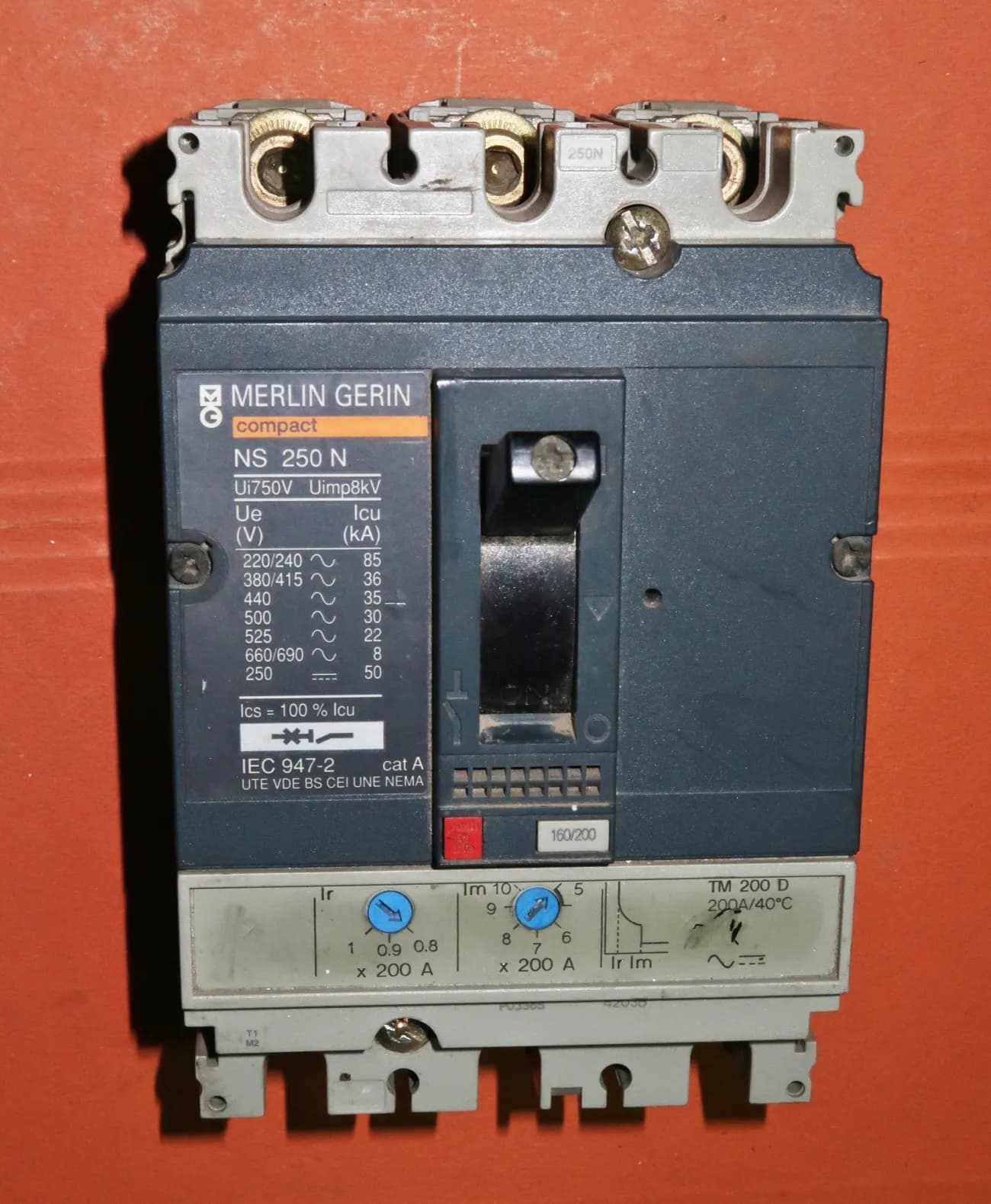
Electrical housings are where BMC earns its place. LyondellBasell's F 4401, a halogen-free glass-polyester BMC for circuit breakers, insulators and contact holders, lists a comparative tracking index of 600 under IEC 60112, electric strength of 15 to 20 kV/mm under IEC 60243, arc resistance of 180 to 210 s and UL 94 V-0 at 1.6 mm [S8]. Its BMC 605, for breakers, transformer bobbins and motor end bells, adds a UL relative thermal index of 130 °C under UL 746B, V-0 at 1.8 mm and a heat deflection temperature above 260 °C [S9]. Menzolit's injection BMC 2600 lists CTI 600 V, V-0 at 3.0 mm, a glow-wire ignition temperature of 960 °C and a 32% oxygen index [S12]. IDI's 40 Series BMCs reach V-0 at 1.5 mm with dielectric strength of 11 to 12 kV/mm [S15].
Every one of those ratings is tied to a thickness and a color. A V-0 rating at 1.6 mm does not cover a 1.0 mm wall, and UL recognition belongs to a named compounder, grade, color and file number, such as UL E107758 for F 4401 [S8] or E53587 for IDI [S16]. In China the national product standard for this market is GB/T 23641-2018, fiber-reinforced unsaturated polyester molding compounds (SMC and BMC) for electrical purposes, in force since 1 January 2019 and covering polyester and epoxy vinyl ester compounds [S27].
Injection BMC buys cycle time with fiber length. A Budd Company patent records that injection molding typically cuts notched impact strength by about 75% and tensile strength by about 60% against compression molding of the same BMC, because the screw damages the reinforcing fiber, and screw transport is more severe than a plunger [S21]. Shrinkage also varies widely by grade: the Alliance injection BMC profile expands by 0.1% [S1], IDI's 40 Series shrinks 0.1 to 0.3% [S15], F 4401 0.02 to 0.2% [S8] and BMC 605 0.25 to 0.42% [S9]. Low- and zero-shrink BMC formulations give the surface quality needed for headlamp reflectors, steam-iron housings and coffee machines [S1]. When a part moves from compression to injection, rerun the mechanical and dimensional approval rather than carrying the compression data across.
| Grade | CTI | UL 94 | Dielectric or electric strength | Other | Source |
|---|---|---|---|---|---|
| LyondellBasell F 4401 | 600 (IEC 60112) | V-0 at 1.6 mm; halogen-free | 15–20 kV/mm (IEC 60243) | Arc resistance 180–210 s; UL file E107758 | [S8] |
| LyondellBasell BMC 605 | 600+ (method printed as ASTM D2303) | V-0 at 1.8 mm | 13.75–14.75 kV/mm (ASTM D149) | UL RTI 130 °C electrical and mechanical; HDT 260 °C+ | [S9] |
| Menzolit BMC 2600 (injection) | 600 V (IEC 60112) | V-0 at 3.0 mm | Not listed | GWIT 960 °C (IEC 60695-2-13); oxygen index 32% | [S12] |
| IDI 40 Series | Not listed | V-0 at 1.5 mm | 11–12 kV/mm | Arc resistance 180+ s (ASTM D495) | [S15] |
| Alliance electrical BMC profile | 600 (IEC 60112) | HB at 1.6 mm | 25 kV/mm (IEC 60243-1) | Glow wire 650 °C | [S1] |
Source: Compounder datasheets and Alliance profiles. BMC 605 cites ASTM D2303, which is the inclined-plane tracking test; ask for IEC 60112 CTI if that is what the drawing requires.
7. SMC and BMC market size and the China supply base
Europe is the only region with a measured series. AVK counts 253 kt of SMC and BMC processed in Europe in 2025, 183 kt of SMC and 70 kt of BMC, the largest segment of the European thermoset GRP market at 26.6% of volume [S2]. SMC fell 2.1% and BMC 2.8% in 2025 as battery-housing projects of 2023 and early 2024 were cut back; SMC battery covers, charging infrastructure and a recovering electrical market partly offset automotive weakness [S2]. Global figures are consultancy forecasts: Grand View Research puts the SMC and BMC market at USD 4.3 billion in 2025, rising to USD 7.4 billion by 2033 at 7.0% a year [S22].
China publishes no SMC or BMC output statistic. The nearest official series is the China Glass Fiber Industry Association's thermoset glass-fiber-reinforced plastics output, about 3.64 Mt in 2024 and up 13.0%, inside a total GFRP output of 7.50 Mt [S23]; SMC and BMC sit inside that thermoset figure together with pultrusion, winding, infusion and hand lay-up. Company disclosures show the scale of individual plants. Changzhou Rixin Molding Technology publishes 50,000 t/yr of SMC and 20,000 t/yr of BMC capacity, five presses of 1,500 to 3,000 tonnes and ISO 9001, ISO 14001 and IATF 16949 certification [S24]. A 2022 industry survey listed Zhenshi Huamei at 30,000 t/yr of SMC with three imported SMC lines and 26 presses from 300 to 4,000 tonnes, Wuhan Qiangying with design capacity of 50,000 t SMC and 30,000 t BMC, and Qinyang Yaxin and Jiangsu Huaman supplying SMC battery-pack covers to bus and EV makers [S25].
In GetFRP's assessment, where China leads is scale, press fleets, short tool lead times and integrated resin-to-part supply around Changzhou, Ningbo, Wenzhou, Dongguan and Wuhan. Where buyers still find gaps is documentation: Class A online-paint approvals, UL files held in the molder's own name, lot-level CoAs with viscosity and maturation data, and drawings controlled to the revision. Verify those four items before comparing piece prices.
For exports, unsaturated polyester in primary forms falls under HS 3907.91; the US line 3907.91.50 carries 6.5% MFN duty and is on Section 301 List 2 at an additional 25%, a combined 31.5% before any newer China-specific measures [S30] [S31] [estimate: 6.5% + 25%]. Whether a compounded SMC or BMC, or a finished molded part, falls under that line or another chapter 39 heading is a classification question to settle with a binding ruling before quoting landed cost.
↔ Scroll horizontally to see the full chart and data table.
Source: AVK Composites Market Report 2026, Table 1 [S2]. Latest-year values are early-year association estimates and may be revised. No equivalent Chinese SMC or BMC series exists.
View the chart data and evidence
| Series | Category | Value | Unit | Evidence / value basis | Reported range | Point note |
|---|---|---|---|---|---|---|
| SMC | 2020 | 174 | kt | Statistic | — | — |
| SMC | 2021 | 197 | kt | Statistic | — | — |
| SMC | 2022 | 190 | kt | Statistic | — | — |
| SMC | 2023 | 202 | kt | Statistic | — | — |
| SMC | 2024 | 187 | kt | Statistic | — | — |
| SMC | 2025 | 183 | kt | Statistic | — | — |
| BMC | 2020 | 70 | kt | Statistic | — | — |
| BMC | 2021 | 81 | kt | Statistic | — | — |
| BMC | 2022 | 78 | kt | Statistic | — | — |
| BMC | 2023 | 79 | kt | Statistic | — | — |
| BMC | 2024 | 72 | kt | Statistic | — | — |
| BMC | 2025 | 70 | kt | Statistic | — | — |
| Company | Location | Published scale or role | Evidence | GetFRP profile |
|---|---|---|---|---|
| Changzhou Rixin Molding Technology | Jintan, Changzhou, Jiangsu | SMC 50,000 t/yr, BMC 20,000 t/yr; presses 1,500–3,000 t; IATF 16949 | company [S24] | View profile |
| Zhenshi Huamei (Zhenshi Group) | Jiangsu | SMC 30,000 t/yr; 3 imported SMC lines; 26 presses 300–4,000 t | media survey [S25] | — |
| Wuhan Qiangying | Wuhan, Hubei | Design capacity SMC 50,000 t/yr, BMC 30,000 t/yr | media survey [S25] | — |
| Qinyang Yaxin Composite | Henan | Presses of 4,000, 2,000 and 630 t; battery-pack upper covers for bus and car makers | media survey [S25] | — |
| Changzhou Tongchuang | Changzhou, Jiangsu | 4,000 t SMC line; presses 60–1,000 t | media survey [S25] | — |
| Huayuan Advanced Materials | Ningbo, Zhejiang | SMC with about 1 inch fiber; BMC with 3, 6 or 9 mm fiber; factory over 70,000 m² | company [S34] | — |
Source: Company website and a 2022 Aibang industry survey. Survey figures are company statements reported by media and were not independently verified; confirm current lines and presses by audit.
8. SMC and BMC standards: GB/T 15568, GB/T 23641, ISO 8605 and ISO 8606
Chinese and international specifications now line up closely. GB/T 15568-2024, sheet molding compound for general purposes, replaced the 2008 edition, itself a successor to the 1995 original [S26]; it references GB/T 27797.8-2011 for preparing SMC and BMC test plaques [S26]. GB/T 23641-2018 covers SMC and BMC for electrical purposes [S27]. Internationally, ISO 8605:2024 is the third edition of the SMC requirements and specification standard [S28], and ISO 8606:2025 replaced the 1990 BMC and DMC standard in July 2025 [S29].
Specifying a standard is not specifying a grade. These documents define designation systems, test methods and requirement classes; the purchase order still needs the grade, color, thickness-dependent fire and electrical ratings, and the specimen preparation route. For parts, the property values that matter are those taken from the molded part or from plaques made on the production compound lot, not from the compounder's general datasheet.
| Standard | Title or scope | Status | Use in sourcing |
|---|---|---|---|
| GB/T 15568-2024 | Sheet molding compound (SMC) for general purposes | Issued 23 Aug 2024; replaces GB/T 15568-2008 | Chinese SMC compound requirements and designation |
| GB/T 23641-2018 | Fiber-reinforced unsaturated polyester molding compounds (SMC and BMC) for electrical purposes | In force 1 Jan 2019; replaces 2009 edition | Electrical SMC and BMC requirements; covers UP and epoxy vinyl ester |
| GB/T 27797.8-2011 | Test plate preparation, part 8: SMC and BMC molding | In force; cited by GB/T 15568-2024 | How test plaques are made |
| ISO 8605:2024 | Fiber-reinforced plastics, sheet molding compound (SMC), requirements and specifications | Edition 3, March 2024 | International SMC specification |
| ISO 8606:2025 | Fiber-reinforced plastics, bulk and dough molding compounds (BMC and DMC), requirements and specifications | Edition 2, July 2025; replaces ISO 8606:1990 | International BMC specification |
| IEC 60112; IEC 60243; IEC 60695-2-13 | Tracking index; electric strength; glow-wire ignition temperature | Cited on compounder datasheets | Electrical acceptance tests |
| UL 94; UL 746B | Flammability; relative thermal index | Cited on compounder datasheets | Fire and long-term thermal rating, thickness- and color-specific |
9. SMC tooling cost drivers and tool steel
An SMC or BMC compression tool is a pair of heated steel blocks that must hold about 100 bar of internal pressure, stay at 140 to 165 °C and close with shear-edge clearances that leave flash of 0.05 to 0.15 mm [S1]. Prototype tools can be aluminum or unhardened steel; serial tools use quenched and tempered 1.2311 or 1.2738 steel, and high-volume Class A dies may need 1.2738 TS [S1]. Wear protection is hard chrome plating or laser hardening, heating is by steam, oil, high-pressure water or electricity, and temperature, pressure and vacuum sensors should be standard [S1]. Each of those items is a cost line that a cheap quotation tends to drop.
The comparison that matters is against the steel stamping it replaces. Reported tooling savings for SMC run 60 to 65% against steel in a 1995 Ford review [S20], as much as 50% in 2017 [S18] and 50 to 70% below 150,000 parts a year in 2016 [S17]; a Chinese industry survey gives SMC molds as 50 to 60% cheaper than metal stamping dies [S25]. These are different eras and scopes, so read them as a consistent direction rather than one number. We found no published, dated price range for SMC compression tools from a primary source; ask bidders to break tool quotations into steel, machining hours, plating, heating, vacuum system, ejection and trial shots so that offers can be compared line by line.
Four design choices move tool cost most: projected area, which sets steel mass and press class; ribs, bosses and cores, which add machining and sliding actions; Class A requirements, which add tool steel grade, polishing, chrome, vacuum sealing and the loss of ejectors on the show surface; and the number of molded-in inserts. The Alliance recommends draft of 1.0° per side on ribs and 1.5° on returns on non-visible faces, and 0.5° per side on ribs in localized areas of Class A faces [S1]; tight draft is cheap to draw and expensive to demold.
10. SMC and BMC defects: porosity, blisters, knit lines and sink marks
Most SMC and BMC defects trace back to air, flow fronts and cure. The Alliance glossary defines porosity as small voids of 1 mm or less, blisters as raised areas caused by gases under pressure, knit lines as extremely weak areas where flow fronts converge, and sink marks or rib read-out as localized depressions opposite ribs caused by non-uniform shrinkage [S1]. It names the remedies too: vacuum assist reduces porosity, overflows reduce porosity and improve knit lines, and holes are often added as secondary operations to avoid knit lines [S1]. Undercure shows up as blisters and blown bosses, and dieseling burns where air and styrene vapor are trapped [S1].
Verification should match the defect. Burn-off (loss on ignition) of a molded coupon confirms glass content against the RFQ; GB/T 2577-2005 is the Chinese burn-off method for the resin content of glass-fiber-reinforced plastics [S37]. Peer-reviewed SMC research uses micro-computed tomography at about 13 µm voxel size to see fiber orientation and voids [S7], and a paint-bake trial at the line temperature is the only reliable screen for paint pops [S19]. Knit lines are a strength question as much as a cosmetic one, so put tensile or flexural coupons across the knit line into the first-article plan wherever a knit line sits in a loaded area.
| Defect | Typical cause | How to check | Acceptance to agree |
|---|---|---|---|
| Porosity (voids of 1 mm or less) | Trapped air, low pressure, no vacuum assist | Sectioning, CT on critical zones; surface inspection after paint | Void size and count per area on show faces |
| Blisters | Gas under pressure, undercure, moisture | Post-bake inspection; cure check | No blisters after bake at line temperature |
| Knit lines | Converging flow fronts, holes molded in | Charge-pattern review; coupons across the knit line | Minimum strength across knit line vs base material |
| Sink marks and rib read-out | Ribs too thick, shrinkage, wrong LP system | Visual under defined lighting; profilometry on Class A | Rib thickness about 0.75 T; no visible read-out on Class A |
| Paint pops | Outgassing through microcracks in e-coat and paint ovens | Paint-bake trial on production panels | Pops per 100 panels; Class A target close to steel |
| Non-fill and dieseling | Short charge, pregel, trapped air and styrene vapor | Charge-mass log; vent check | Charge mass tolerance and vent maintenance |
| Warpage | Uneven wall, uneven tool temperature, flow orientation | Fixture check after conditioning | Flatness and profile tolerances after conditioning |
11. RFQ checklist for SMC and BMC compounds and molded parts
Split the RFQ by what you are buying. A compound purchase is a materials contract: grade, lot certificates, shelf life and storage. A molded-part purchase is a manufacturing contract: drawing, tool ownership, process window, first article and ongoing inspection. Many Chinese suppliers do both under one roof, which is efficient, but the documents should still be separate so that a compound change triggers re-approval of the part.
- 1. Material: SMC or BMC; resin family (polyester or vinyl ester); glass content by mass with tolerance, for example 30 ± 2%; chop length (25 mm or 50 mm SMC; 6–12 mm BMC); filler type and halogen-free requirement; target density, for example 1.9 g/cm³ or 1.2–1.4 g/cm³ low density.
- 2. Properties on molded plaques or part coupons: tensile and flexural strength and modulus to ISO 527 and ISO 178, or ASTM D638 and D790, with minimums, not typicals; impact to ISO 179 or ASTM D256; shrinkage target, for example −0.05–0% for Class A.
- 3. Electrical and fire: CTI to IEC 60112 (for example 600 V); UL 94 class at the actual minimum wall thickness and color, with the UL file number in the molder's or compounder's name; glow-wire to IEC 60695-2-12 or -13 where the product standard requires it; RTI to UL 746B.
- 4. Process window on the CoA for every lot: production date, maturation and viscosity check, storage temperature (no warmer than 20 °C for SMC) and expiry.
- 5. Molding: press tonnage and platen size for the tool (about 1,020 t per m² of projected area at 100 bar), tool temperature, cavity pressure, vacuum assist yes or no, cure time per mm, charge mass and pattern.
- 6. Tooling: steel grade (1.2311, 1.2738 or 1.2738 TS for Class A), chrome plating, heating medium, sensors, ejection, number of trial shots included, tool ownership and transfer terms.
- 7. Class A only: paint system and bake temperature passed (190–200 °C online), in-mold coating yes or no, defect count per 100 panels from production.
- 8. First article: full dimensional report after conditioning, burn-off glass content, coupons across knit lines in loaded zones, defect map against Table 8.
- 9. Standards and documents: GB/T 15568-2024 or ISO 8605 for SMC, GB/T 23641-2018 or ISO 8606 for BMC, IATF 16949 for automotive parts, PPAP level if required.
- 10. Commercial: HS code and duty basis for the destination, Incoterm, packaging that protects the compound from heat during shipping, MOQ, lead time and change-notification clause.
Frequently asked questions
What is the main difference between SMC and BMC?
SMC is a sheet with glass fibers generally chopped to 25 mm, at about 30% glass for general grades and up to 50–60% for structural grades, and is compression molded into larger panels. BMC is a dough with 6–12 mm fibers and 10–20% glass that can be compression, transfer or injection molded into small, detailed parts. Both use polyester or vinyl ester resin with mineral filler and cure in hot steel tools.
Is SMC stronger than BMC?
In typical datasheets, yes, because SMC carries longer fibers and more glass. A 30% glass exterior SMC is listed at about 80 MPa tensile and 180 MPa flexural strength, and a 50% glass structural SMC at 180 and 270 MPa, while BMC grades sit at about 25–50 MPa tensile and 90–130 MPa flexural strength. Flexural modulus is similar, about 9.5–14 GPa, because filler carries stiffness.
What temperature and pressure are used to mold SMC?
The European SMC/BMC Alliance gives tool temperatures of usually 140–160 °C and about 100 bar on the projected area, with cure of 30–45 seconds per millimeter of wall and typical cycles under two minutes. Structural grades run at 155–160 °C and 100–160 bar. BMC grades are commonly molded at about 150 °C and 35–65 bar.
What is Class A SMC?
Class A SMC is a low-profile SMC that molds an exterior automotive body surface with no waviness, fiber pattern, sink marks or paint pops and survives online paint baking above 190 °C. It needs vacuum-assist molding, chrome-plated high-grade tool steel and no ejectors on the show face. Low-density Class A grades reach 1.2–1.24 g/cm³ against 1.9 for standard SMC.
Can BMC be injection molded?
Yes. Injection BMC runs at about 135–155 °C mold temperature and 2–8 MPa injection pressure, with small parts cycling well under 60 seconds. The trade-off is fiber damage: a Budd patent records about 75% lower notched impact strength and 60% lower tensile strength than compression molding of the same compound, so requalify parts when switching routes.
What CTI and UL 94 ratings can BMC achieve?
Electrical BMC grades commonly list a comparative tracking index of 600 V under IEC 60112 and UL 94 V-0 at 1.5–1.8 mm, with UL relative thermal indices around 130 °C and glow-wire ignition temperatures up to 960 °C on some grades. Ratings are specific to the compounder, grade, color, thickness and UL file.
Which Chinese standards cover SMC and BMC?
GB/T 15568-2024 covers general-purpose SMC and replaced the 2008 edition; GB/T 23641-2018 covers SMC and BMC for electrical purposes and has been in force since 1 January 2019. The international equivalents are ISO 8605:2024 for SMC and ISO 8606:2025 for BMC and DMC.
How big is the SMC and BMC market?
Europe processed 253,000 t in 2025, 183,000 t of SMC and 70,000 t of BMC, according to AVK. Grand View Research forecasts the global market at USD 4.3 billion in 2025, rising to USD 7.4 billion by 2033. China publishes no SMC or BMC statistic; individual Chinese compounders publish capacities of 30,000–50,000 t/yr of SMC.
Sources and scope
Figures were cross-checked against primary documents where available; secondary citations are marked in each scope note. Company figures are reported as disclosed by the companies themselves. This note is an independent market assessment and not investment advice.
- [S1]European Alliance for SMC/BMC, Design for Success: A Design and Technology Manual for SMC BMC (2016), mirror copy
Industry design manual: compounding, fiber length 25–50 mm SMC and 6–12 mm BMC, sheet format, maturation, tool temperature 140–160 °C, about 100 bar, cycle and cure per mm, property profiles, Class A tooling, draft and rib rules, defect glossary. Read from a mirror because the Alliance URL returned 404.
- [S2]AVK, Composites Market Report 2026 (European market 2025)
European SMC and BMC volumes 2020–2025 (Table 1), 26.6% share, 2025 changes and application commentary. Europe only.
- [S3]Guilhem and Reestman (BYK-Chemie), Additives for molding compounds composed of unsaturated polyester, Techniques de l'Ingenieur AM3245 (2011)
Glass content 20–60% SMC and 10–18% BMC; processing 130–170 °C and 2–12 MPa; context for burn-off testing. Free abstract portion only.
- [S4]Brucite+, MagPro magnesium oxide for composites, technical brochure
Reference general-purpose SMC formulation (Table 1) and thickener dosage 0.5–3%. Supplier document; not a commercial SMC grade.
- [S5]Johns Manville, Assembled roving for sheet moulding compound
Fiber length about 1 inch at 20–50% of the compound; roving 2,400 or 4,800 tex; Class A roving grade.
- [S6]Jushi, 440 assembled roving for SMC, technical data sheet (distributor copy)
Linear density 2,400/4,400/4,800 tex, 14–16 µm filament, polyester and vinyl ester compatibility; 456 grade for Class A.
- [S7]Trauth, Pinter and Weidenmann, Tensile properties and fiber orientation of structural SMC, Journal of Composites Science 1(2):18 (2017)
Peer-reviewed: unfilled vinyl ester SMC, 25.4 mm fibers, 17–31 vol% fiber, 64–150 MPa tensile, molding at about 150 °C, micro-CT method.
- [S8]LyondellBasell, BMC F 4401 technical data sheet (2019)
Halogen-free electrical BMC: CTI 600 (IEC 60112), V-0 at 1.6 mm, 15–20 kV/mm, mechanical ranges, 150 °C and 35–65 bar molding, UL file E107758.
- [S9]LyondellBasell, BMC 605 technical data sheet (2019)
Electrical BMC: density 1.99, tensile 35–45 MPa, flexural 95–115 MPa, V-0 at 1.8 mm, RTI 130 °C, CTI 600+ (method printed as ASTM D2303), shrinkage 0.25–0.42%.
- [S10]LyondellBasell, Premi-Glas 7000 Class A SMC technical data sheet
Class A SMC minimum values: density max 1.90, tensile min 50 MPa, flexural min 110 MPa and 8 GPa, Izod min 800 J/m; molding at about 150 °C.
- [S11]Menzolit, SMC 0410 premium Class A technical data sheet (distributor copy)
Class A SMC: 1.90 g/cm³, 90 MPa tensile at yield, 190 MPa flexural, 11 GPa; 145–155 °C, 8–10 MPa; online paint bake 190–200 °C with conductive primer.
- [S12]Menzolit, BMC 2600 injection BMC technical data sheet (distributor copy)
Injection BMC: 135–155 °C mold, 2–8 MPa injection pressure, CTI 600 V, V-0 at 3.0 mm, GWIT 960 °C, oxygen index 32%.
- [S13]Continental Structural Plastics, TCA Ultra Lite 855LD technical data sheet (distributor copy)
Low-density Class A SMC: specific gravity 1.24, 39% glass, 77 MPa tensile, 170 MPa flexural, 7.8 GPa.
- [S14]Altraset (Mar-Bal), AS-8250 FR structural SMC data sheet (2021)
50% glass structural SMC: 1.75–1.85 g/cm³, 180 MPa tensile, 270 MPa flexural, 12.5 GPa; UL 94 V-0 at 6 mm, non-listed.
- [S15]IDI Composites, 40 Series BMC data sheet (2016)
BMC grades: density 1.7–2.0, V-0 at 1.5 mm, dielectric strength 11–12 kV/mm, arc resistance 180+ s, shrinkage 0.1–0.3%.
- [S16]IDI Composites, BMC 6060D data sheet (distributor copy)
20% glass BMC: 1.80–1.90 g/cm³, 44.8 MPa tensile, 124 MPa flexural, 11 GPa, V-0 at 2.2 mm; UL file E53587.
- [S17]CompositesWorld, Low-density SMC: Better living through chemistry (8 February 2016)
Hollow glass microspheres, 9 kg saving on 2016 Corvette panels, SMC about 40% lighter than metal, 50–70% tooling saving below 150,000 parts a year. Trade press.
- [S18]CompositesWorld, Composites in Class A body panels: Evolution continues (19 January 2017)
Tooling savings up to 50%, one SMC tool vs three to five steel dies, cost advantage up to 150,000 units a year, 30% lighter tailgate. Trade press.
- [S19]CompositesWorld, SMC resin and primer advances prevent paint pops (1 February 2004)
Paint-pop mechanism, 177 °C ovens, up to four times steel rates, near-steel defect levels by mid-2003. Trade press column.
- [S20]WardsAuto, SMC: From design diversity to disassembly (1 January 1995)
SMC tooling 60–65% cheaper than steel; Ford examples. Historical trade press.
- [S21]Budd Company, US Patent 5,753,164, Method of molding BMC
Injection vs compression: about 75% lower notched impact and 60% lower tensile strength from fiber damage; BMC mold temperature 300–325 °F.
- [S22]Grand View Research, Sheet molding and bulk molding compound market report (April 2026), via GII
Forecast: USD 4.3 billion in 2025, USD 7.4 billion by 2033, 7.0% CAGR. Consultancy estimate, not a statistic.
- [S23]Jiangsu Changhai Composite Materials, 2024 annual report summary (April 2025), quoting China Glass Fiber Industry Association data
China GFRP output 7.50 Mt in 2024, thermoset about 3.64 Mt (+13.0%). No SMC/BMC split.
- [S24]Changzhou Rixin Molding Technology, company profile (official website)
Founded 2009; SMC 50,000 t/yr and BMC 20,000 t/yr capacity; five presses of 1,500–3,000 t; ISO 9001, ISO 14001, IATF 16949. Company statements.
- [S25]Aibang (CMPE), SMC for battery packs and an inventory of producers (20 January 2022)
Survey of 18 Chinese SMC/BMC producers with company-stated capacities and presses; SMC density 1.7–1.9, molds 50–60% cheaper than stamping dies. Industry media; figures not independently verified.
- [S26]GB/T 15568, Sheet molding compound (SMC) for general purposes, edition history (Chinese Standard listing)
GB/T 15568-2024 issued 23 August 2024, replacing the 2008 and 1995 editions; normative reference to GB/T 27797.8-2011. Secondary listing.
- [S27]GB/T 23641-2018, Fiber reinforced unsaturated polyester molding compounds (SMC and BMC) for electrical purposes (Chinese Standard listing)
Issued 7 June 2018, in force 1 January 2019, replaces the 2009 edition; covers UP and epoxy vinyl ester. Secondary listing.
- [S28]ISO 8605:2024, Fibre-reinforced plastics — Sheet moulding compound (SMC) — Requirements and specifications
Edition 3, March 2024. Catalogue entry.
- [S29]ISO 8606:2025, Fibre-reinforced plastics — Bulk moulding compound (BMC) and dough moulding compound (DMC) — Requirements and specifications
Edition 2, July 2025, replaces ISO 8606:1990. Catalogue entry.
- [S30]USITC, Harmonized Tariff Schedule search, heading 3907.91 (2026 revision)
Unsaturated polyesters in primary forms: 3907.91.50 at 6.5% MFN. Classification of compounded SMC/BMC not confirmed by ruling.
- [S31]USITC, Harmonized Tariff Schedule chapter 99 (2026), US note 20
3907.91 lines listed under heading 9903.88.02 (Section 301 List 2, +25%).
- [S32]Yongyue Technology, first-quarter 2025 operating data announcement (cninfo)
FRP-grade unsaturated polyester average selling price RMB 7,346/t (Q1 2025) and RMB 7,121/t (Q1 2024), excluding VAT; one producer only.
- [S33]Guosen Securities, building materials weekly (7 May 2025), quoting Sublime China Information
2400 tex E-glass direct roving RMB 3,500–3,800/t, average RMB 3,735/t, late April 2025.
- [S34]Huayuan Advanced Materials, SMC vs BMC: what is the difference (12 December 2024) and company page
SMC fiber usually 1 inch; BMC fiber 3, 6 or 9 mm; factory over 70,000 m². Company statements.
- [S35]CompositesWorld, Automated solution: New presses for SMC molding process (24 July 2009)
Example of 400-ton four-post hydraulic presses for SMC enclosures; context for press classes. Trade press.
- [S36]GB/T 2577-2005, Test method for resin content of glass fiber reinforced plastics (Code of China listing)
Chinese burn-off (ignition loss) method for resin and hence glass content of GFRP. Secondary listing.
- [S37]CompositesWorld, Continental Structural Plastics debuts new low-density SMC (29 September 2014)
TCA Ultra Lite at 1.2 specific gravity, up to 35% lighter than standard 1.9 SMC. Trade press; datasheet value is 1.24.
Image provenance and usage terms appear in each caption; see image credits. Submit a source correction.